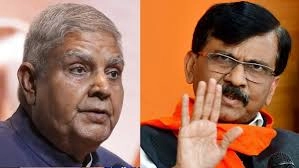
In a striking revelation made in Sanjay Raut’s book titled “Unlikely Paradise,” it is alleged that Jagdeep Dhankhar, the current Vice President of India, resigned from his previous position due to undue pressure from the Enforcement Directorate (ED). This claim has ignited widespread speculation and debate, as it touches upon the intricate relationship between political figures and investigative agencies in India. Raut’s assertion raises questions about the integrity of political offices and the influence of governmental bodies on individual careers.
The Enforcement Directorate, a law enforcement agency tasked with enforcing economic laws and combating financial crimes, has often been at the center of controversies involving political figures. The allegation that Dhankhar stepped down under pressure from such an agency paints a troubling picture of the political landscape in India. It suggests an environment where individuals may feel compelled to resign due to external pressures, potentially undermining the democratic process and the stability of governance.
Furthermore, Raut’s book delves into the broader implications of such incidents, exploring how political maneuvering and the involvement of investigative agencies can affect the functioning of democracy. The claim marks a significant moment in Indian politics, as it not only highlights the challenges faced by political leaders but also invites scrutiny of the methods employed by agencies like the ED. As the narrative unfolds, it prompts critical discussions about accountability, transparency, and the overall health of democratic institutions in the country.
The impact of these revelations could be far-reaching, as they may resonate with the public’s perception of trust in political leadership and institutions. As more details emerge, the discourse surrounding Dhankhar’s resignation and the role of the ED will likely continue to evolve, reflecting the complexities of Indian politics and governance.