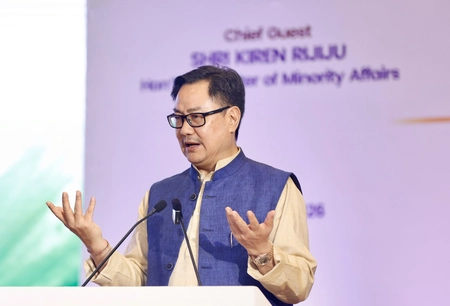
The government is actively updating its minority welfare schemes to ensure they remain effective and relevant for the communities they aim to serve. Kiren Rijiju, the Union Minister for Law and Justice, has emphasized the importance of collaboration with state governments in this endeavor. He has called upon the states to submit their proposals promptly, highlighting the need for timely inputs to enhance the implementation of these schemes.
Rijiju underscored that the schemes are designed to address the unique challenges faced by minority communities across the country. By regularly updating these programs, the government aims to provide better support and resources to empower these groups. The minister’s appeal for swift proposals from the states reflects a proactive approach to governance, ensuring that local needs and conditions are taken into account when formulating policies.
Moreover, the continuous evolution of minority welfare schemes signifies the government’s commitment to inclusivity and social justice. By urging state governments to engage in this process, Rijiju is fostering a collaborative environment where local authorities can contribute their insights and experiences. This partnership is crucial for tailoring initiatives that resonate with the actual needs of minority populations, ultimately enhancing their quality of life and opportunities for development.
In conclusion, the government’s ongoing efforts to refine minority welfare schemes, coupled with the call for state cooperation, demonstrates a strategic approach to addressing the diverse needs of India’s minority communities. By working together, the central and state governments can create a more inclusive framework that not only supports these communities but also promotes overall national progress.