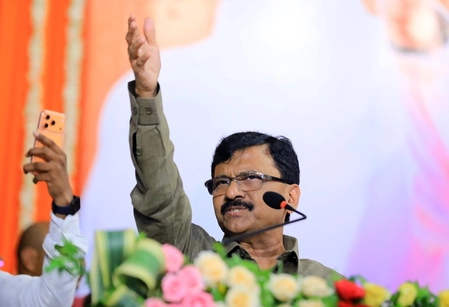
Sanjay Raut, a prominent leader from the Shiv Sena party, has recently called for a movement demanding the dissolution of the Ram Mandir Trust. This announcement has sparked significant interest and debate among political circles and the general public. Raut’s declaration comes amid ongoing discussions and controversies surrounding the management and operations of the trust that oversees the construction and administration of the Ram Temple in Ayodhya.
The Ram Temple, a symbol of cultural and religious pride for many Hindus, has been a focal point of political discourse in India for decades. The trust, established to facilitate the temple’s construction, has faced scrutiny regarding its transparency and governance. Raut’s call for the trust’s dissolution raises questions about accountability and the need for a more inclusive approach to managing such a significant religious site.
Raut’s movement aims to address these concerns and advocate for reforms within the trust. By mobilizing public sentiment, he hopes to draw attention to what he perceives as mismanagement and a lack of representation for the broader Hindu community. This initiative reflects larger themes of governance, religious identity, and the intersection of politics and faith in contemporary India.
As the movement gains momentum, it is likely to attract a diverse range of opinions and reactions. Supporters may rally behind Raut’s cause, viewing it as a necessary step towards greater accountability, while critics might argue against the dissolution of the trust, emphasizing the need for stability during the temple’s construction phase. The coming weeks will be critical in determining the trajectory of this movement and its potential impact on the Ram Temple’s future.