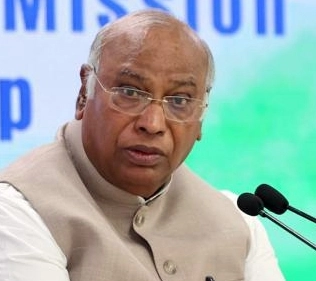
Mallikarjun Kharge, the President of the Indian National Congress, has called for an all-party meeting to discuss the implementation of women’s reservation in legislative bodies. This initiative comes in light of the increasing demand for gender equality and the representation of women in Indian politics. The push for women’s reservation has been a longstanding issue in the country, with various political parties supporting the idea but often failing to translate that support into concrete action.
Kharge’s proposal for an inclusive dialogue among all political factions underscores the importance of collaboration in addressing this critical matter. He believes that a unified approach can help overcome the challenges that have historically hindered the passage of women’s reservation bills. By bringing together leaders from different parties, Kharge aims to create a consensus on the necessity of ensuring that women have a more significant role in decision-making processes at all levels of governance.
The women’s reservation bill seeks to reserve a specific percentage of seats for women in the Lok Sabha and state legislative assemblies. This measure is intended to empower women and provide them with greater opportunities to participate in politics, thereby fostering a more inclusive democracy. However, the implementation of such measures has faced numerous obstacles, including political opposition and societal attitudes towards women’s roles in public life. Kharge’s initiative represents a critical step toward addressing these barriers and advancing the agenda of women’s empowerment in India.
In calling for an all-party meeting, Kharge emphasizes the need for political will and cooperation to achieve meaningful progress. It is crucial for leaders across the political spectrum to prioritize women’s representation and work collaboratively to ensure that the necessary legislative frameworks are established. Only through a concerted effort can India hope to realize the vision of a more equitable society where women are not only represented but are also active participants in shaping the nation’s future.