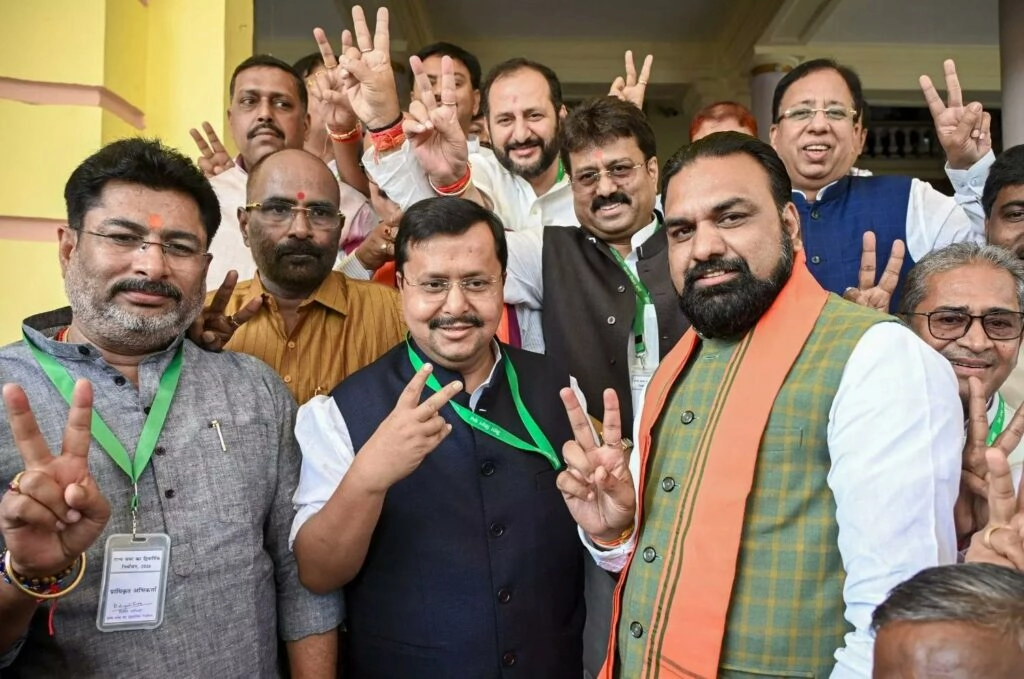
The National Democratic Alliance (NDA) has achieved a significant victory in the recent Rajya Sabha elections, securing all five seats allocated to Bihar and two in Odisha. This success is a notable consolidation of power for the NDA, which is led by the Bharatiya Janata Party (BJP) and includes several regional allies. The victories in these states are seen as strategic for the NDA, as they bolster its presence in the Upper House of Parliament, enabling it to influence legislation more effectively.
In stark contrast, the Congress party has expressed strong discontent with the election results, alleging irregularities and unfair practices during the voting process. They claim that the NDA’s victories were not solely based on merit but rather on manipulation and coercive tactics that undermined the democratic process. This reaction from the Congress highlights the ongoing political tensions in India, particularly between the ruling coalition and opposition parties, which often accuse each other of undermining democratic norms.
The Rajya Sabha elections are pivotal, as they determine the composition of India’s Upper House, which plays a crucial role in shaping national legislation. The NDA’s clean sweep in Bihar and Odisha not only enhances its numerical strength in the Rajya Sabha but also sends a clear message about its political dominance in these regions. As the political landscape continues to evolve, the implications of these victories could resonate beyond the immediate electoral context, influencing future elections and party strategies across the country.
As the dust settles on this electoral battle, the Congress party is likely to reassess its strategies and alliances in order to mount a more effective challenge to the NDA. The outcome of the Rajya Sabha elections serves as a reminder of the ever-changing dynamics of Indian politics, where state-specific factors and coalition politics play a crucial role in determining electoral outcomes. The coming months will be critical for both the NDA and the opposition as they navigate the challenges and opportunities presented by this latest electoral development.