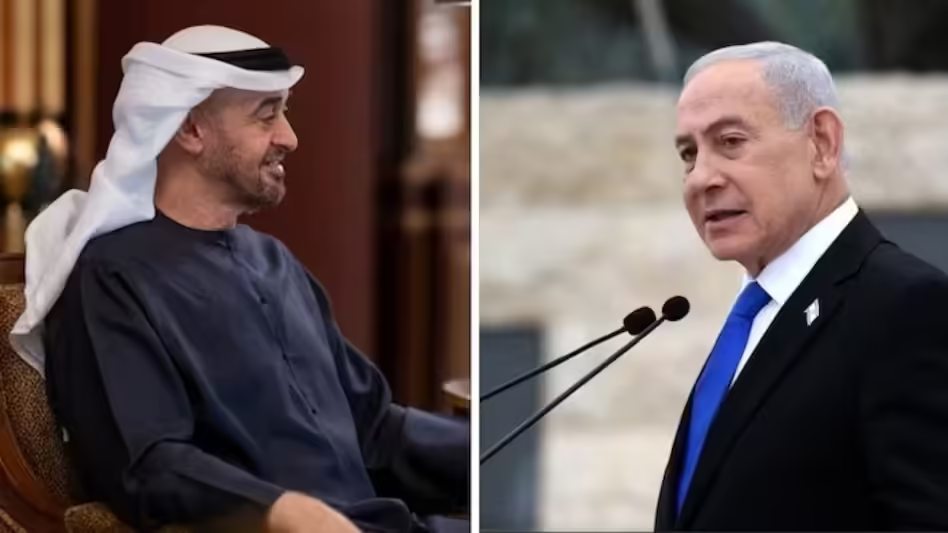
A controversy has erupted regarding a reported secret meeting between Israeli Prime Minister Benjamin Netanyahu and a Sheikh from the United Arab Emirates (UAE). The Israeli government had claimed that this clandestine meeting took place, suggesting a strengthening of ties between the two nations beyond their previously established diplomatic relations. However, officials from Abu Dhabi have categorically denied these claims, stating that no such meeting occurred. This denial raises questions about the nature of the relationship between Israel and the UAE, particularly in light of the historic normalization of relations that took place in 2020 under the Abraham Accords.
The Israeli government’s assertion of a secret meeting could be seen as an attempt to showcase its diplomatic prowess or to rally support within its own political landscape. Netanyahu’s administration has been keen on highlighting its foreign policy achievements, especially in a region that has seen significant geopolitical shifts. Nonetheless, the swift denial from Abu Dhabi indicates that the UAE may be cautious about its public image and the implications of such high-profile meetings. The UAE has positioned itself as a moderate player in the Middle East, and any perceived clandestine dealings with Israel could potentially disrupt its standing with other Arab nations.
This incident sheds light on the complexities of Middle Eastern diplomacy, where public narratives and private discussions often diverge. The denial from the UAE may also reflect a desire to manage its relationships with other Arab states, many of whom remain skeptical of Israel following decades of conflict. As the region continues to navigate the intricacies of diplomacy, the dynamics between Israel and the UAE will undoubtedly be scrutinized by various stakeholders. Both nations must consider the broader implications of their interactions, particularly in the context of regional stability and their respective domestic politics.