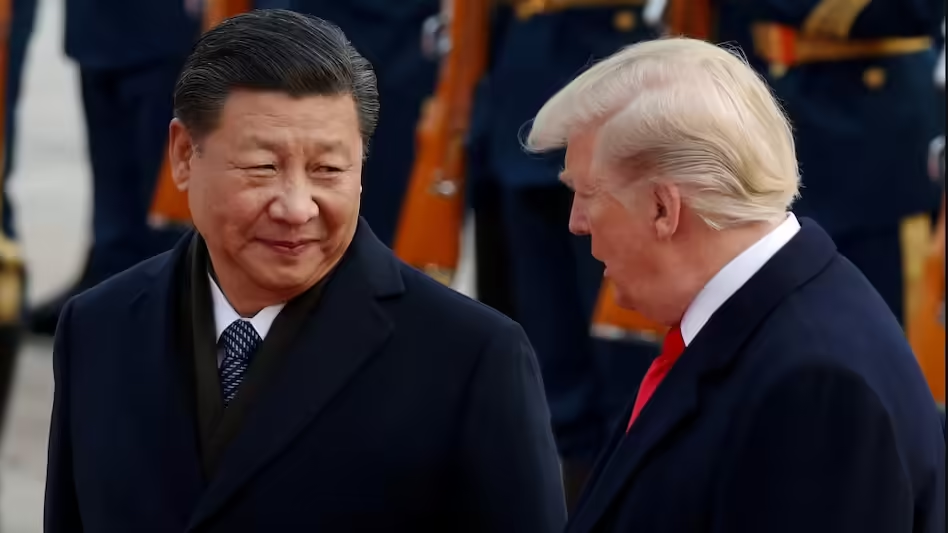
A high-profile meeting took place in Beijing, where Chinese President Xi Jinping addressed the United States, referring to it as a partner. This significant dialogue marked a notable shift in tone amid ongoing tensions between the two global powers. Xi expressed a desire for reduced friction and a cooperative approach, signaling a willingness to engage in constructive discussions that could potentially ease the strained relations that have characterized U.S.-China interactions in recent years.
The meeting underscored the importance of diplomacy and dialogue in resolving conflicts and fostering mutual understanding. Xi emphasized that collaboration between the two nations could lead to beneficial outcomes, not only for China and the United States but also for the global community. By framing the U.S. as a partner rather than an adversary, Xi’s remarks aimed to open the door for dialogue on various pressing issues, including trade, climate change, and security concerns.
This call for partnership comes at a time when both countries face significant challenges that require cooperative solutions. The economic interdependence between the U.S. and China means that their actions have far-reaching implications, not just for their own citizens but for the world at large. As they navigate complex geopolitical landscapes, the importance of maintaining open lines of communication cannot be overstated. The hope is that such high-level engagements will lead to a more stable and constructive relationship, fostering a spirit of collaboration over competition.
In conclusion, Xi Jinping’s acknowledgment of the United States as a partner highlights a potential turning point in the bilateral relationship. The emphasis on reducing tensions and seeking common ground may pave the way for a new era of cooperation, where both nations can address global challenges together. As the world watches closely, the outcome of these discussions will have lasting implications for international relations and global stability.