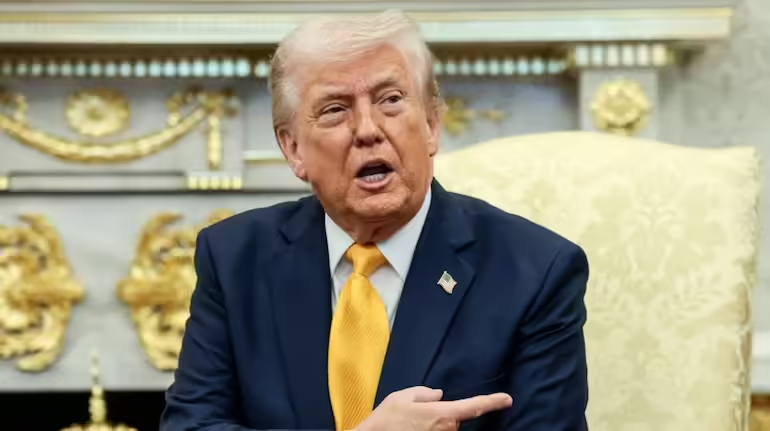
The negotiations between the United States and Iran have reached a critical juncture, with President Trump issuing a stark warning ahead of the discussions. He stated that if a deal is not reached by Wednesday, the consequences could be significant. This ultimatum raises questions about the future of U.S.-Iran relations, particularly as tensions have escalated over various issues, including Iran’s nuclear program and its influence in the Middle East.
Trump’s warnings reflect a broader strategy that aims to pressure Iran into compliance with U.S. demands. The President has long maintained a hardline stance against Tehran, seeking to curb its nuclear ambitions and limit its regional activities. As the deadline approaches, it remains to be seen how Iran will respond to the pressure. Will they take a conciliatory approach, or will they stand firm against what they perceive as U.S. aggression?
The international community is closely watching these developments, as a failure to reach an agreement could have far-reaching implications not only for U.S.-Iran relations but also for global security. Allies in Europe and the Middle East are likely to be affected as well, as they have a vested interest in maintaining stability in the region. As the clock ticks down to the deadline, both sides must navigate the complexities of diplomacy, balancing their respective interests while working toward a potential resolution. The outcome of these negotiations could redefine the geopolitical landscape in the Middle East for years to come.