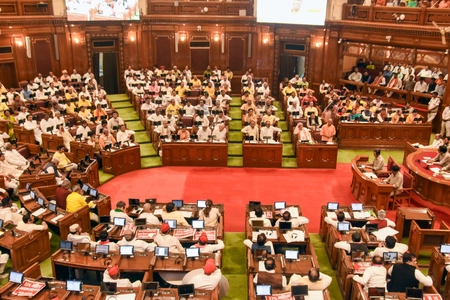
In the Uttar Pradesh Legislative Assembly, a heated debate erupted regarding the issue of women’s reservation, culminating in a significant clash among members. The discussion was marked by sharp exchanges and confrontations, particularly in light of a proposed censure motion. As tensions escalated, various legislators expressed their views passionately, often leading to interruptions and a chaotic atmosphere in the assembly. The importance of women’s representation in politics was at the forefront of the debate, with proponents arguing for the necessity of reserving seats for women to ensure their active participation in governance.
The conflict intensified as members from different political factions engaged in fierce arguments, each trying to assert their stance on the reservation issue. Some legislators accused their opponents of undermining women’s rights, while others highlighted the need for broader reforms in the political system. This clash not only showcased the divisive nature of the topic but also reflected the larger societal challenges surrounding gender equality in India. Amidst the uproar, speakers were often interrupted, leading to a situation where many statements were made off the record and went unaddressed in the official proceedings.
As the debate unfolded, it became clear that women’s reservation is not just a legislative issue but a reflection of societal attitudes towards women in leadership roles. The lack of consensus among assembly members illustrated the complexity of achieving genuine representation for women in politics. The discussions, fraught with emotion and urgency, underscored the need for a concerted effort to address the barriers that prevent women from participating fully in the political landscape. Ultimately, the assembly’s tumultuous session highlighted the ongoing struggle for women’s rights and the critical need for reforms that promote inclusivity and equality in governance.