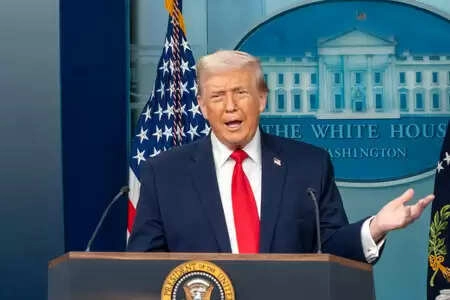
Former President Donald Trump made a significant claim regarding the recent conflict between the United States, Israel, and Iran, suggesting that the newly appointed Supreme Leader of Iran, Mojtaba Khamenei, was injured during an attack involving American and Israeli forces. This assertion has raised eyebrows and sparked discussions about the current geopolitical tensions in the Middle East. The allegations come at a time when relations between the U.S. and Iran are particularly strained, with ongoing debates about nuclear agreements and military interventions.
Trump’s statement points to the fraught dynamics in the region, where military actions often have profound implications for leadership and power structures. If true, the injury of a prominent figure like Mojtaba Khamenei could signify a shift in Iran’s political landscape and potentially impact the country’s response to external pressures. The Supreme Leader’s health and stability are crucial factors in Iran’s governance and its approach to foreign policy, especially concerning adversaries like the United States and Israel.
The international community is closely monitoring the situation, as any developments could lead to a reevaluation of strategies by both Iran and its rivals. Furthermore, the implications of such an injury could extend beyond immediate military concerns, affecting Iran’s internal politics and its relations with other countries in the region. As Trump’s statements circulate, the potential for misinformation or exaggeration must also be considered, leading to a cautious approach in interpreting the claims surrounding the alleged attack. Overall, the situation highlights the complex interplay of military action, leadership stability, and international relations in a region marked by longstanding conflicts.