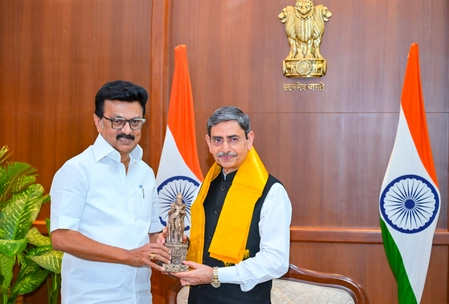
In Tamil Nadu, Chief Minister M.K. Stalin recently met with R.N. Ravi to congratulate him on his appointment as the Governor of West Bengal. This meeting signifies the cordial relationship and mutual respect between the leaders of different states in India. Chief Minister Stalin, representing the Dravida Munnetra Kazhagam (DMK) party, has been known for his efforts to foster cooperative federalism and strengthen inter-state relations. By extending his congratulations to Ravi, who has transitioned from being the Governor of Tamil Nadu to taking on a significant role in West Bengal, Stalin demonstrated his commitment to maintaining positive political ties across state lines.
The appointment of R.N. Ravi as West Bengal’s Governor comes at a crucial time, as the state navigates various socio-political challenges. His experience as the former Governor of Tamil Nadu equips him with a nuanced understanding of governance and regional dynamics, which will be essential in his new role. During their meeting, both leaders likely discussed the importance of collaboration between the state and central governments, especially in addressing the needs of the citizens and ensuring developmental progress. The dialogue between Chief Minister Stalin and Governor Ravi could pave the way for future cooperation, particularly in areas such as education, health care, and infrastructure.
Moreover, this interaction highlights the importance of communication and collaboration among political leaders in India. By congratulating Ravi, Chief Minister Stalin sets a precedent for goodwill and support among political figures, irrespective of their party affiliations. Such gestures are vital in a diverse nation like India, where regional differences can often lead to friction. The ability of leaders to come together and engage in constructive dialogue is essential for the democratic fabric of the country, as it fosters an environment where policies can be discussed and implemented effectively. Ultimately, the meeting between CM Stalin and R.N. Ravi serves as a reminder of the importance of unity and cooperation in governance, which can lead to better outcomes for the citizens they serve.