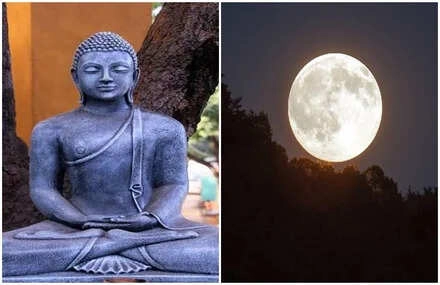
On May 1, the phenomenon of a lunar eclipse coinciding with Buddha Purnima has sparked curiosity and speculation among people. Buddha Purnima, which celebrates the birth, enlightenment, and death of Gautama Buddha, is a significant occasion for Buddhists around the world. The lunar eclipse, which occurs when the Earth positions itself between the sun and the moon, casting a shadow on the moon, adds a layer of intrigue to this auspicious day.
Many believe that celestial events like lunar eclipses can have spiritual implications. Some followers of Buddhism may see this occurrence as a time for reflection and deepening their spiritual practices. The alignment of such events is often interpreted in various ways within different cultural and religious contexts. While some may view it as an omen, others may see it as an opportunity for introspection and meditation, aligning with the teachings of Buddha.
It is essential to differentiate between superstition and the scientific understanding of such astronomical phenomena. A lunar eclipse is a natural occurrence that can be predicted with precision. The truth is that while the eclipse may coincide with Buddha Purnima, it does not hold any inherent spiritual significance mandated by Buddhist teachings. Instead, it can serve as a reminder of the interconnectedness of the cosmos and our lives, encouraging individuals to engage in practices that promote peace, mindfulness, and compassion, which are central tenets of Buddhism.