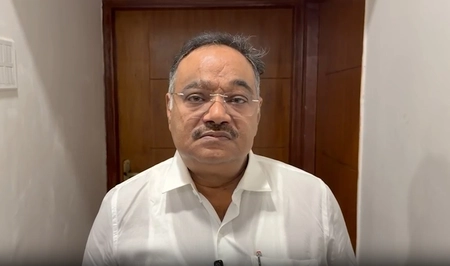
Abhishek Banerjee, a prominent leader of the Trinamool Congress (TMC), has recently come under attack, and this incident has been attributed to the internal factionalism within the party. Samik Bhattacharya, a senior member of the Bharatiya Janata Party (BJP), has commented on the situation, suggesting that the discord within the TMC is reaching a breaking point. Bhattacharya’s remarks indicate that the ongoing struggles for power and influence among different factions within the TMC could have serious repercussions for the party’s unity and stability.
The political landscape in West Bengal has been increasingly turbulent, with various parties vying for dominance. The TMC, which has been a dominant force in the state, is now facing challenges from within, as rival factions grapple for control. Abhishek Banerjee, who is also the nephew of Chief Minister Mamata Banerjee, has been a key player in the party’s strategies and outreach efforts. However, the recent attack on him underscores the vulnerabilities that can arise from internal conflicts, as members may resort to drastic measures in their quest for power.
Bhattacharya’s observations highlight the broader implications of such internal strife, suggesting that it could weaken the TMC’s position against opposing parties, particularly the BJP, which is keen to exploit any signs of disarray within its rivals. As the political climate continues to evolve, the TMC must address these internal disputes to maintain its influence and effectively respond to the challenges posed by the opposition. The dynamics of party politics in West Bengal are complex, and the ability of the TMC to navigate these issues will be crucial for its future success.