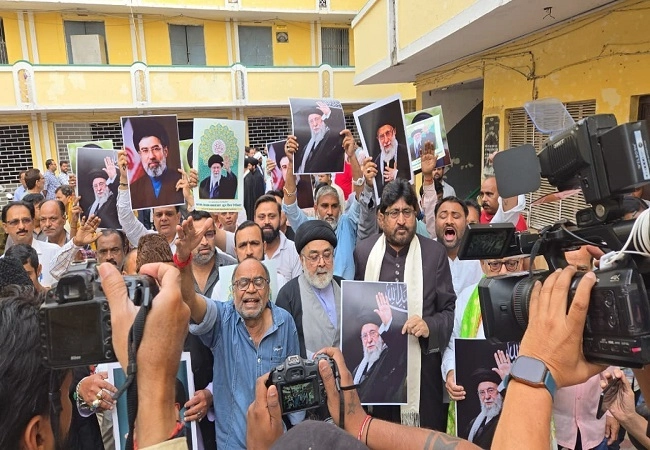
Maulana Yasoob Abbas emphasized that the current geopolitical landscape clearly indicates Iran’s emergence as a superpower. This assertion reflects a significant shift in regional dynamics and highlights Iran’s growing influence across various domains, including politics, economy, and military capabilities. The acknowledgment of Iran as a superpower comes in the wake of its strategic alliances, particularly in the Middle East, where it has been able to extend its reach and bolster its presence through diplomatic and military means.
The implications of Iran’s status as a superpower are profound, not only for the region but also for global politics. Iran has been actively involved in various conflicts and negotiations, positioning itself as a key player in pivotal issues such as the Syrian civil war and the Israeli-Palestinian conflict. The nation’s ability to project power and influence through its proxy groups and alliances has established it as a formidable force that cannot be easily ignored by other nations, particularly those in the West.
Furthermore, Maulana Yasoob Abbas’s statement underscores the importance of recognizing Iran’s advancements in technology and military prowess. The country has invested heavily in its defense capabilities, developing sophisticated missile systems and engaging in cyber warfare, which enhances its deterrence and combat readiness. This military capability, coupled with its rich cultural heritage and economic resources, contributes to Iran’s standing as a superpower in the contemporary world.
In conclusion, the remarks by Maulana Yasoob Abbas serve as a reminder of the shifting power balances in global politics. As Iran consolidates its power and expands its influence, it is essential for other nations to reassess their strategies and relationships in light of this new reality. The rise of Iran as a superpower not only reshapes the landscape of the Middle East but also poses challenges and opportunities for international diplomacy and security.