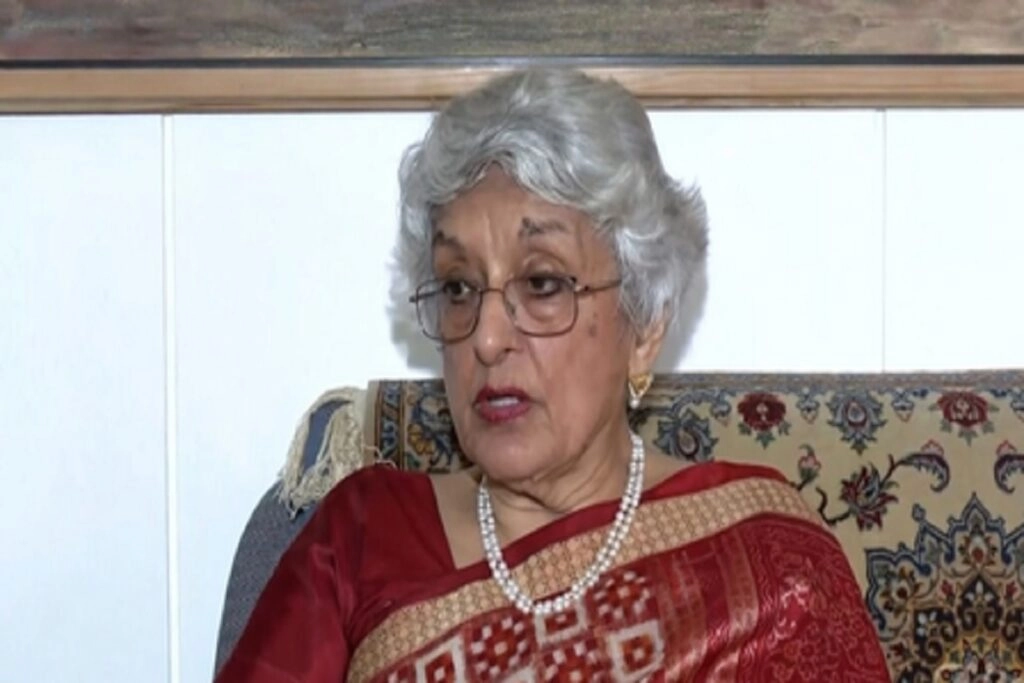
Veena Sikri, a prominent Indian diplomat and former High Commissioner to Bangladesh, expressed her strong discontent regarding the recent report published by the United States Commission on International Religious Freedom (USCIRF). In her remarks, she emphasized that the United States should reflect on its own issues rather than casting judgment on other nations. Sikri’s criticism highlights a growing sentiment among various global leaders who believe that Western countries often overlook their internal challenges while focusing on the perceived shortcomings of others.
Sikri pointed out that the USCIRF report tends to highlight religious freedom violations in countries like India without acknowledging the complexities of their socio-political landscapes. She argued that the United States has its own history of religious and racial discrimination, which raises questions about its moral authority to critique other nations. By failing to address its shortcomings, Sikri believes the U.S. undermines its credibility in international discussions regarding human rights and religious freedom.
Furthermore, Sikri’s comments reflect a broader frustration among many countries that feel unfairly scrutinized by Western entities. She called for a more balanced approach, where nations engage in constructive dialogue rather than unilateral criticism. In her view, mutual respect and understanding are essential for fostering international relations and addressing global issues related to human rights and religious freedoms. As discussions around these topics continue, Sikri’s insights serve as a reminder of the importance of self-reflection and accountability on a global scale.