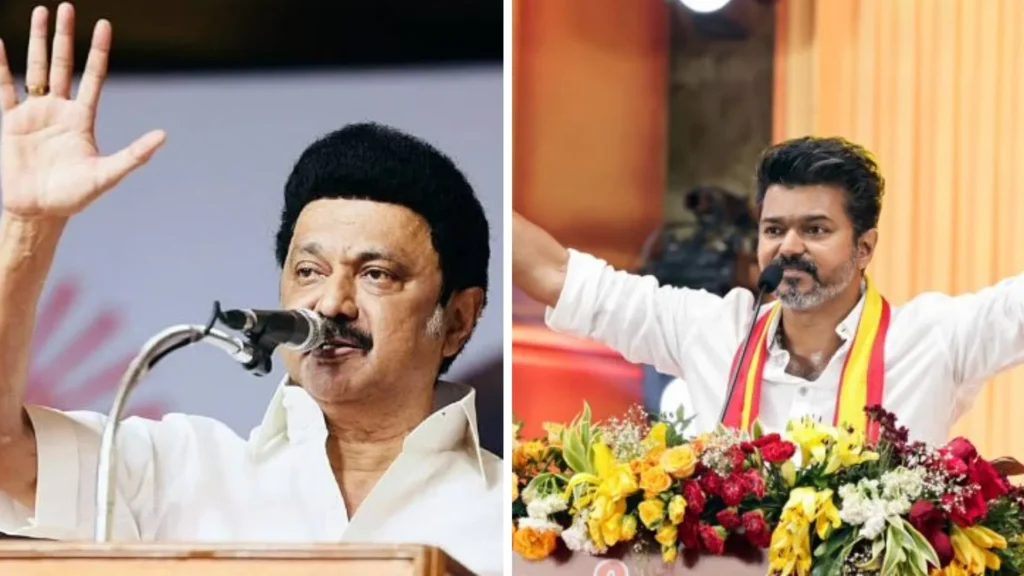
Vijay’s rise to the position of Chief Minister has sparked significant controversy in Tamil Nadu politics, particularly due to his strategic use of social media to engage with the youth. His ability to connect with younger voters through platforms like Instagram has drawn both admiration and criticism. The statement made by his political rival, Stalin, has further intensified the debate surrounding this modern approach to political campaigning. Stalin’s remarks suggest that Vijay’s ascent to power was not solely based on traditional political methods but rather on a calculated move to capture the attention and support of the younger demographic, which is increasingly influential in shaping electoral outcomes.
The impact of social media on politics cannot be understated, and Vijay’s success highlights a shifting paradigm in how political leaders communicate with the electorate. By leveraging platforms frequented by the youth, he has been able to craft a public persona that resonates with their aspirations and concerns. This method of engagement contrasts sharply with conventional practices, leading to a reevaluation of what constitutes effective political strategy in the digital age. Stalin’s critiques reflect a deeper concern within the political community about the implications of such tactics, raising questions about authenticity and the potential for superficiality in political discourse.
As the situation unfolds, it is clear that the interplay between social media and political power will continue to be a defining feature of Tamil Nadu’s political landscape. The reactions to Vijay’s methods underscore a broader trend where traditional political approaches are being challenged by innovative strategies that prioritize direct communication with voters. The ongoing discussions prompted by Stalin’s statement serve as a reminder of the evolving nature of political engagement and the necessity for leaders to adapt to changing dynamics in order to remain relevant and effective in their governance.