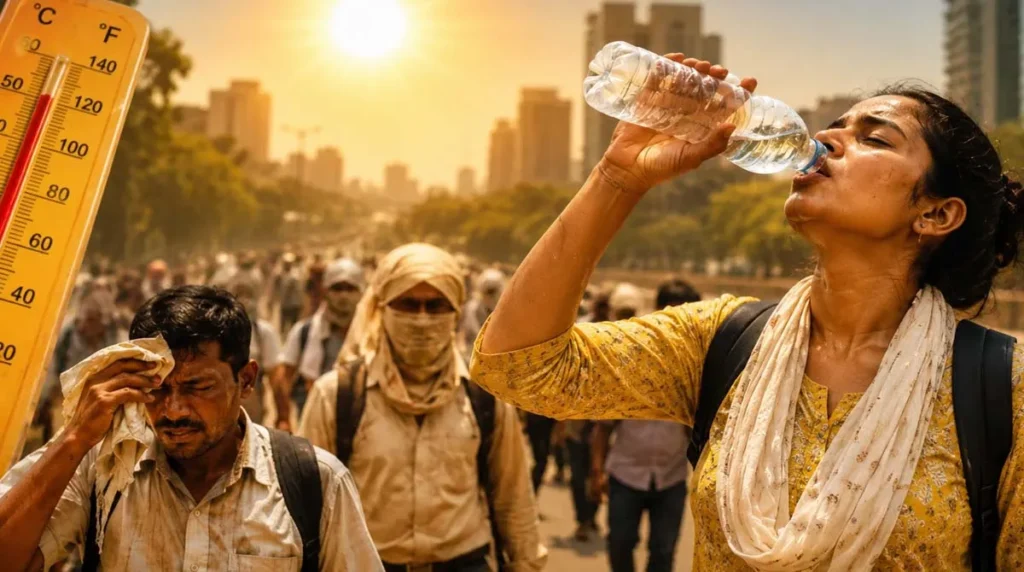
The heat wave gripping North India is set to reach unprecedented levels, as temperatures soar to a staggering 47 degrees Celsius over the next three days. This extreme weather pattern is breaking all previous records and poses significant challenges for the region’s residents. The relentless heat not only affects daily life but also has severe implications for health, agriculture, and overall well-being. Authorities are on high alert, urging people to take precautions and stay hydrated as the scorching sun bears down relentlessly.
As the forecast predicts fire-like conditions, residents are bracing themselves for the intense heat. With such extreme temperatures, the risk of heat-related illnesses increases dramatically, particularly among vulnerable groups such as the elderly and children. The government and health officials are advising people to limit outdoor activities during peak hours, seek shade, and drink plenty of water. Urban areas are expected to experience the urban heat island effect, intensifying the discomfort.
Moreover, this extreme heat is likely to impact agriculture, leading to concerns about crop yields and food supply. Farmers are worried about the effects of prolonged high temperatures on their crops, which could lead to reduced production and economic hardship. The situation calls for urgent attention to climate resilience strategies, as such weather events may become more frequent in the future. North India finds itself in a precarious position, grappling with the immediate challenges posed by the heat wave while also needing to consider long-term solutions to mitigate the impact of climate change.