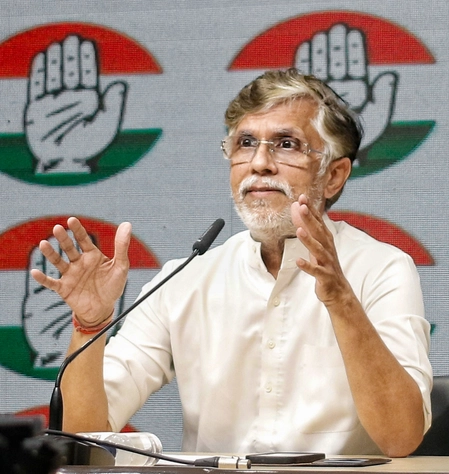
The phrase “मुंह में राम, बगल में छुरी,” which translates to “Ram on the lips, a knife in the armpit,” has become a focal point in the ongoing political discourse in India, particularly regarding the recent case of embezzlement linked to donations for the Ram Temple. This expression emphasizes hypocrisy, highlighting the disparity between outward piety and inner malice. The Congress party has seized upon this saying to criticize the Rashtriya Swayamsevak Sangh (RSS) and its affiliates, suggesting that their public facade of devotion and integrity is undermined by corrupt practices behind the scenes.
The issue at hand revolves around allegations of misappropriation of funds intended for the construction of the Ram Temple in Ayodhya, a site of immense religious significance for Hindus. As the controversy unfolded, the Congress party issued a sharp rebuttal to statements made by the RSS, pointing to what they perceive as a failure to maintain ethical standards in the management of donations. The party’s leaders argue that this incident reflects a broader pattern of corruption and mismanagement within organizations that claim to serve the public and uphold moral values.
In response to the allegations, the RSS has defended its position, asserting that the funds are being managed transparently and that the organization is committed to the temple’s construction. However, Congress leaders continue to press the point that such claims are undermined by the very nature of the theft, which they argue is indicative of deeper systemic issues within the organization. The political ramifications of this situation are significant, as it not only affects public perceptions of the RSS but also has the potential to influence voter sentiment ahead of upcoming elections.
This ongoing debate encapsulates the broader struggle for political legitimacy and moral authority among India’s political parties, particularly as they navigate the complex interplay of religion and governance. The phrase “मुंह में राम, बगल में छुरी” serves as a potent reminder of the need for accountability and integrity in public life, especially in the context of institutions that wield considerable influence over the nation’s cultural and spiritual landscape. As the situation develops, it remains to be seen how this controversy will impact both the RSS and Congress in the evolving political landscape of India.