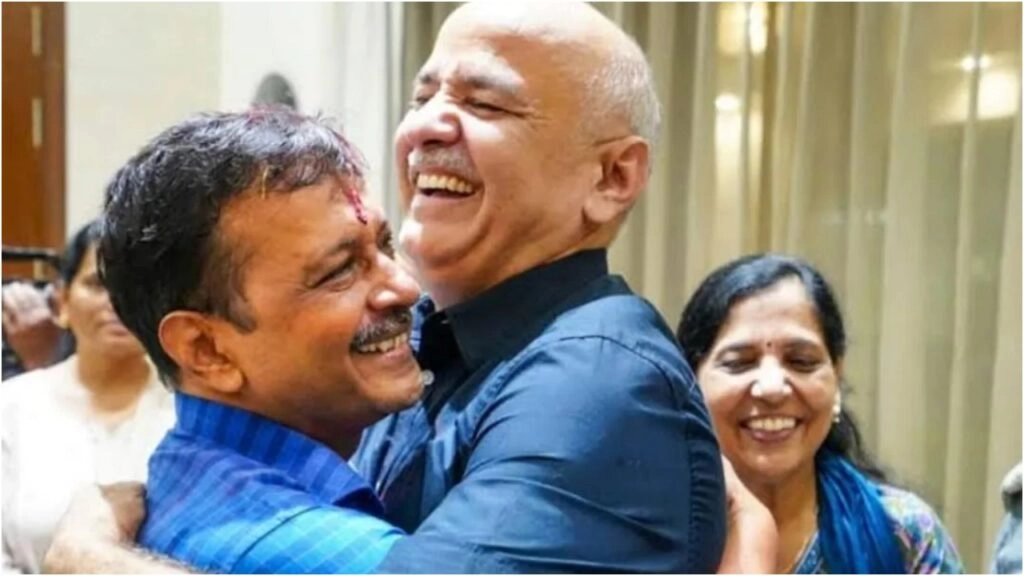
Arvind Kejriwal, the Chief Minister of Delhi, along with his former deputy Manish Sisodia, has been acquitted in a high-profile case related to the alleged liquor scam that had garnered significant media attention and public scrutiny. The case revolved around accusations of corruption in the formulation and implementation of the Delhi government’s liquor policy, which was alleged to have been manipulated for the benefit of certain private entities. The legal proceedings had been lengthy and complex, involving extensive investigations and numerous court hearings.
The acquittal marks a significant moment for Kejriwal and Sisodia, particularly in the context of the political atmosphere in Delhi. Both leaders have consistently maintained their innocence, asserting that the charges were politically motivated and aimed at undermining their governance and the Aam Aadmi Party (AAP). The Delhi liquor policy was designed to boost revenue and curb illegal liquor trade, and its implementation had been a point of contention with various stakeholders. The case had implications not only for the individuals involved but also for the credibility of the AAP as a political entity in the national landscape.
With their acquittal, Kejriwal and Sisodia are likely to leverage this outcome to reinforce their political standing and continue their agenda of reform and transparency in governance. The decision could also impact the dynamics of opposition parties, who have been vocal critics of the AAP government. In the wake of this ruling, the focus may shift back to policy discussions and governance issues in Delhi, with Kejriwal and his team seeking to move past the allegations that have overshadowed their administration. The legal battle, while concluded for the time being, has highlighted the contentious nature of politics in India, where accusations and counter-accusations often dominate the discourse.