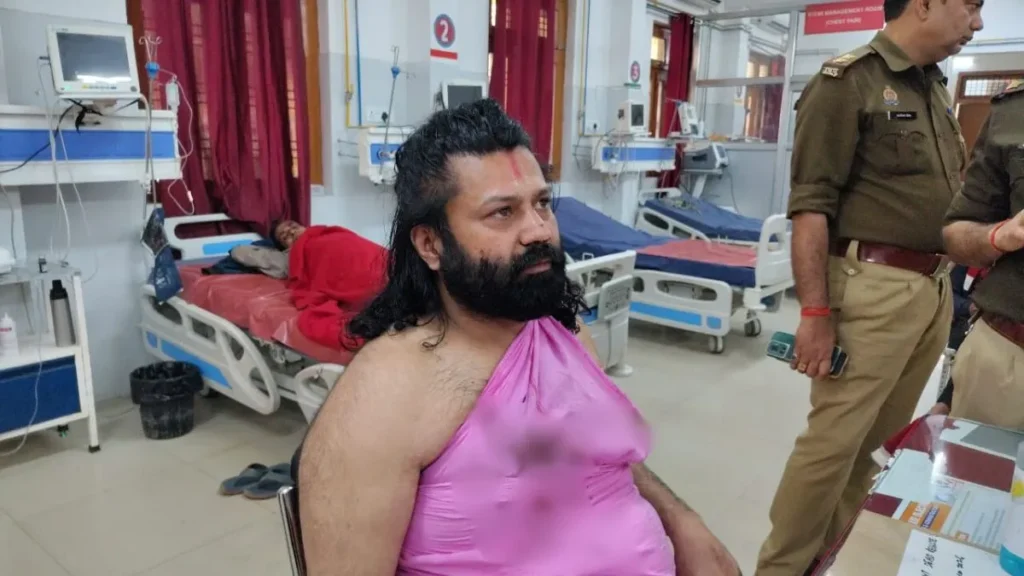
Ashutosh Brahmachari faced a terrifying ordeal when he was brutally attacked with a sharp weapon. The assailant’s intent was evidently to inflict serious harm, as they attempted to sever Ashutosh’s nose in a violent confrontation. The attack was sudden and vicious, leaving him in a state of panic and desperation. In a moment of quick thinking, Ashutosh managed to escape the immediate threat by retreating to a train toilet, where he sought refuge from his attacker. This narrow space provided him with a temporary sanctuary, allowing him a brief moment to gather his thoughts and assess the situation.
The incident highlights not only the severity of the attack but also the instinctual drive for survival that kicked in during the crisis. In such dire circumstances, the ability to think on one’s feet can make the difference between life and death. Ashutosh’s decision to hide in the train toilet exemplifies this instinct, as he sought safety in a confined space while assessing how to deal with the attacker. The fear and adrenaline must have surged through him, amplifying the urgency of his situation and the need for immediate action.
As news of the attack spread, it raised questions about safety on public transport and the prevalence of violent incidents in society. Such confrontations are alarming and serve as a stark reminder of the potential dangers individuals may face in everyday situations. Ashutosh’s experience underscores the importance of vigilance and preparedness, especially in environments where one might be vulnerable. While he managed to evade further injury during the attack, the psychological impact of such an encounter can linger long after the physical threat has subsided. It serves as a testament to the resilience of the human spirit in the face of extreme adversity.