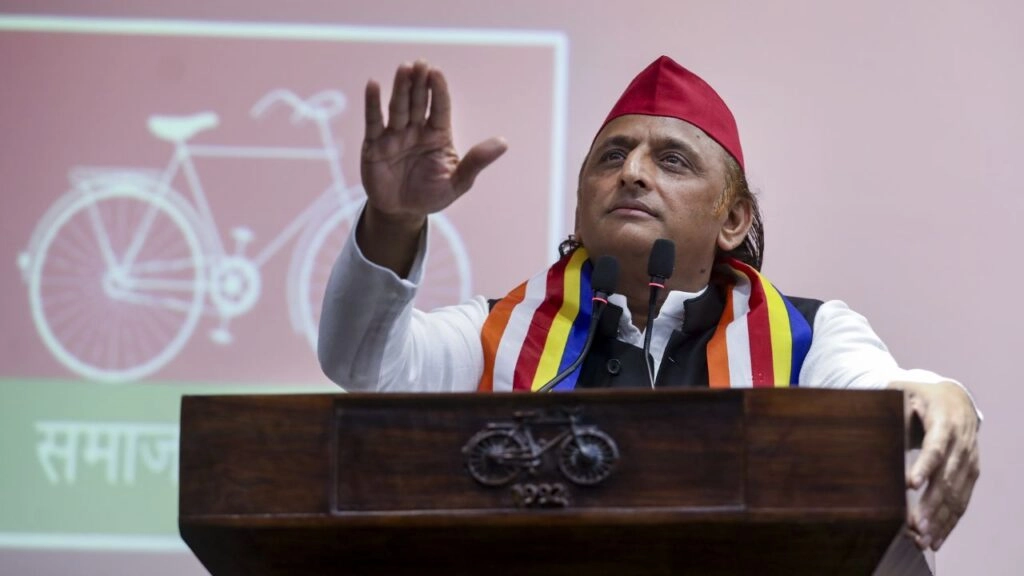
Akhilesh Yadav, the leader of the Samajwadi Party, has been vocal in his criticism of the Bharatiya Janata Party (BJP), particularly regarding what he perceives as the party’s disrespect towards the Brahmin community. Yadav has consistently highlighted the concerns and grievances of Brahmins, asserting that they have not received the recognition and respect they deserve under the current regime. He argues that the BJP has failed to address the issues faced by this community, which has historically held significant influence in Uttar Pradesh politics.
In a recent event, Rajkumar Bhati, a member of the BJP, responded to Yadav’s accusations in a dramatic manner by dousing him with water. This act was seen not only as a physical response but also as a metaphorical dismissal of Yadav’s claims. The incident has drawn attention to the escalating tensions between the two political factions in a state where caste dynamics play a crucial role in electoral politics. The confrontation underscores the high stakes involved as both parties vie for the support of various communities, including Brahmins, who are crucial voters in the region.
The exchange between Yadav and Bhati exemplifies the ongoing political rivalry in Uttar Pradesh, where both parties are trying to solidify their base. Yadav’s focus on the Brahmin community is strategic, aiming to consolidate support among voters who may feel alienated by the BJP’s policies. On the other hand, the BJP’s reaction, particularly through Bhati’s actions, reflects their attempt to counter Yadav’s narrative and maintain their grip on power in the state. As the political landscape continues to evolve, the interactions between leaders of these two parties will likely shape the future of Uttar Pradesh’s governance and its electorate’s sentiments.