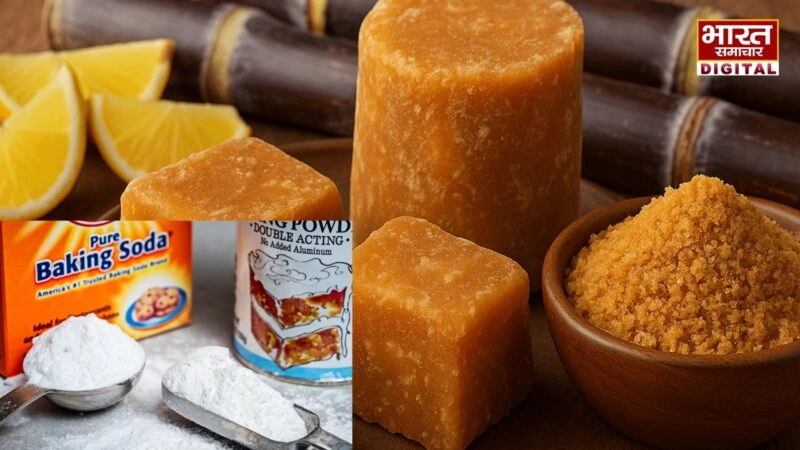
Jaggery, a traditional sweetener made from sugarcane or palm sap, is widely cherished for its natural sweetness and health benefits. However, the rising cases of adulteration in jaggery pose significant health risks. Common adulterants such as baking soda and detergents are often added to enhance color and improve texture, but these substances can have detrimental effects on human health. Consuming jaggery contaminated with these harmful additives can lead to serious ailments, including digestive issues, allergic reactions, and long-term health complications.
To safeguard your health, it is essential to identify adulterated jaggery before purchasing or consuming it. One simple home test involves dissolving a small piece of jaggery in warm water. If the water turns yellow or forms a frothy layer, it may indicate the presence of baking soda. Another method is to take a small quantity of jaggery, rub it between your fingers, and observe its texture. Pure jaggery should feel grainy and not produce a soapy residue, which is a sign of detergent contamination.
Moreover, purchasing jaggery from reputable sources or local producers who adhere to quality standards can further minimize the risk of adulteration. It is important to remain vigilant and informed about the potential dangers associated with consuming adulterated jaggery. By being proactive in identifying and avoiding these harmful products, you can enjoy the natural sweetness of jaggery without compromising your health. Ultimately, awareness and education about the risks of adulteration are key to making informed choices for a healthier lifestyle.