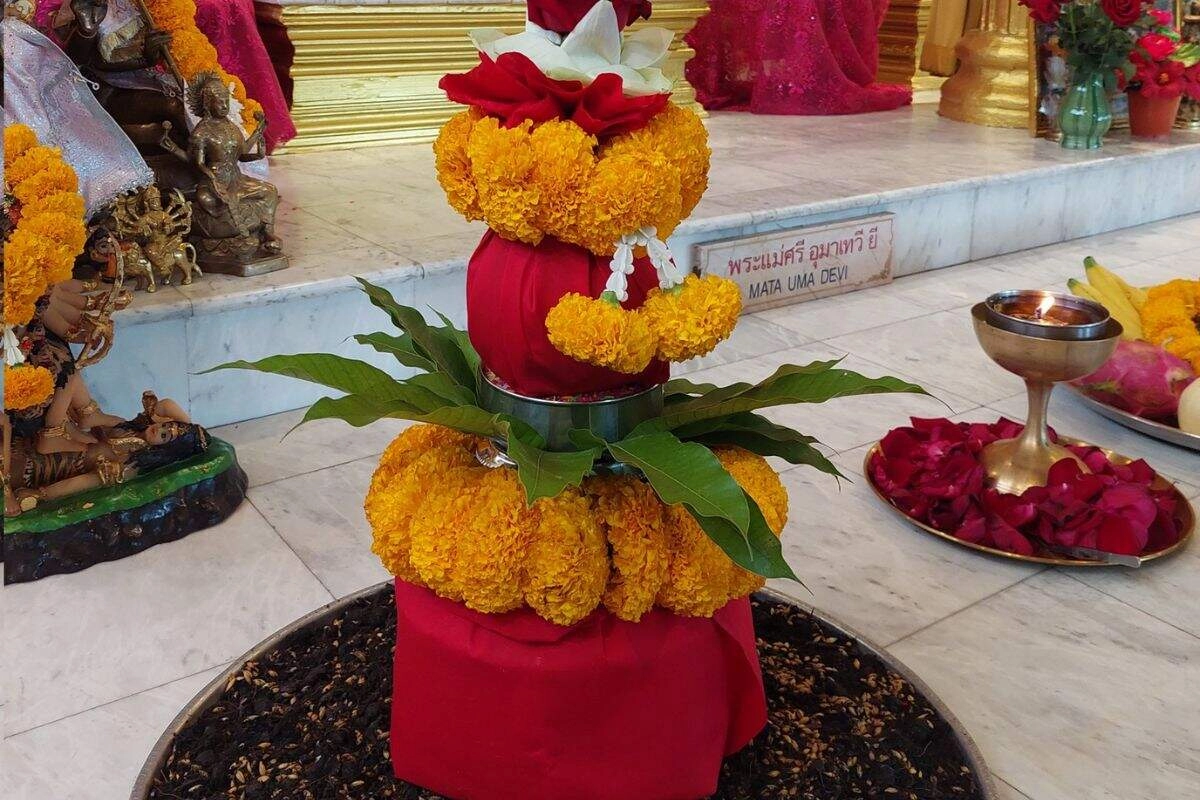
Navratri, a vibrant and significant festival in Hindu culture, is dedicated to the worship of Goddess Durga. One of the key rituals performed during this auspicious time is the Ghatsthapna, or the installation of the sacred pot. This ceremony usually takes place on the first day of Navratri and marks the beginning of the nine nights of devotion and celebration. Understanding the procedure and the materials required for Ghatsthapna is essential for a successful observance of this tradition.
To perform the Ghatsthapna, devotees need specific items. Typically, a clay pot or kalash is used, which is filled with holy water and adorned with mango leaves and a coconut placed on top. Additionally, one should gather sacred items such as a red cloth, rice, flowers, and incense sticks, along with images or idols of Goddess Durga. It is also customary to have a small idol of Lord Ganesha for invoking blessings at the outset of any auspicious activity.
The step-by-step procedure for the Ghatsthapna begins with selecting an appropriate location, ideally in a clean and sacred area of the home. The spot should be decorated and made auspicious. The next step is to place the clay pot in the center, filling it with holy water and placing the coconut on top, surrounded by mango leaves. After this, the devotee should perform a prayer, seeking blessings from the Goddess for the safety and prosperity of the household. It’s important to light a diya (lamp) and offer flowers and rice to the kalash, signifying the welcoming of divine energy into the space. Once the Ghatsthapna is complete, daily prayers and rituals are performed for the next nine nights, celebrating the power and grace of the Goddess.
In conclusion, the Ghatsthapna ceremony plays a vital role in the Navratri festivities, symbolizing the arrival of divine energy and the start of a period dedicated to worship and reflection. By carefully following the rituals and using the proper materials, devotees can ensure that their prayers are offered with sincerity and devotion, fostering a deeper connection with the divine during this sacred festival.