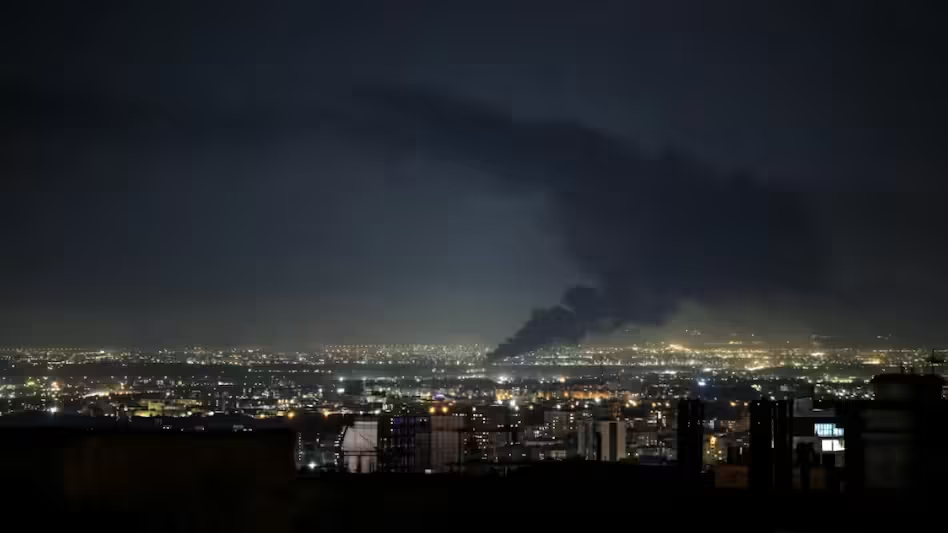
Amidst ongoing peace negotiations, the United States has taken a significant military action by launching airstrikes on Iranian military bases. This escalation raises concerns about the potential for renewed conflict in the region. The airstrikes are seen as a response to various provocations and threats posed by Iran, particularly its support for militant groups and its aggressive posture towards U.S. allies in the Middle East.
The timing of these strikes is particularly critical, as they come at a moment when diplomatic efforts are being made to stabilize relations and reduce tensions. Many observers are questioning whether this military action will derail the peace talks or if it will serve as a strategic move to pressure Iran into compliance with international norms. The complexity of the situation is heightened by the fact that both sides have vested interests in the outcome of these negotiations.
Furthermore, the consequences of such military actions could be far-reaching, impacting not only U.S.-Iran relations but also the broader geopolitical landscape. Should Iran retaliate, it could lead to a cycle of violence that draws in other nations and exacerbates existing conflicts in the region. The international community is closely monitoring the situation, as the risk of war looms large with each passing day. As the situation develops, it remains to be seen whether diplomatic channels can remain open or if military confrontations will dominate the narrative in the coming months.