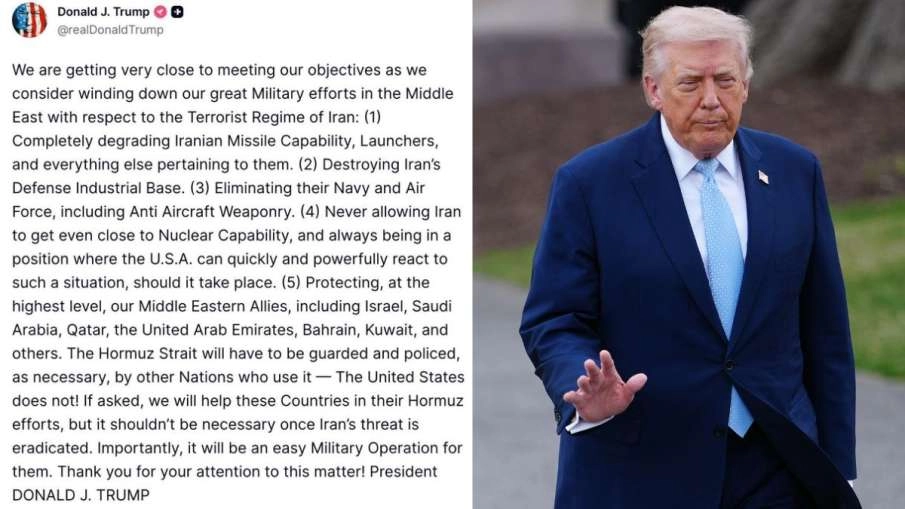
Former President Donald Trump has revealed key aspects of his administration’s policy towards Iran, outlining five reasons for conflict in the region. His statements shed light on the complexities and challenges faced by the United States in dealing with Iranian aggression and its implications for global security. One significant point Trump made was his refusal to take responsibility for the security of the Strait of Hormuz, a vital waterway for global oil transportation. This refusal underscores the delicate balance of power in the region and the reliance on international coalitions to ensure maritime safety.
Trump emphasized that the tensions with Iran were rooted in various factors, including its nuclear ambitions, support for terrorism, and destabilizing activities in the Middle East. He argued that these actions posed a direct threat not only to the United States but also to its allies. The former president’s remarks highlighted the ongoing concerns about Iran’s influence in the region and the potential for military conflict if diplomatic efforts fail.
The Strait of Hormuz is crucial for international trade, as a significant portion of the world’s oil passes through this narrow passage. Trump’s hesitance to assume responsibility for its security suggests a shift in U.S. foreign policy priorities, emphasizing a more isolationist approach. This stance raises questions about the future of U.S. engagement in the Middle East and the potential consequences for global energy markets. As tensions continue to simmer, the need for a coordinated response from the international community becomes increasingly important to prevent any escalation that could lead to armed conflict.
In conclusion, Trump’s insights into the U.S. approach to Iran reveal the multifaceted challenges that characterize the region. With security concerns at an all-time high, the emphasis on shared responsibility among nations may be the key to maintaining peace and stability in the volatile landscape of the Middle East.