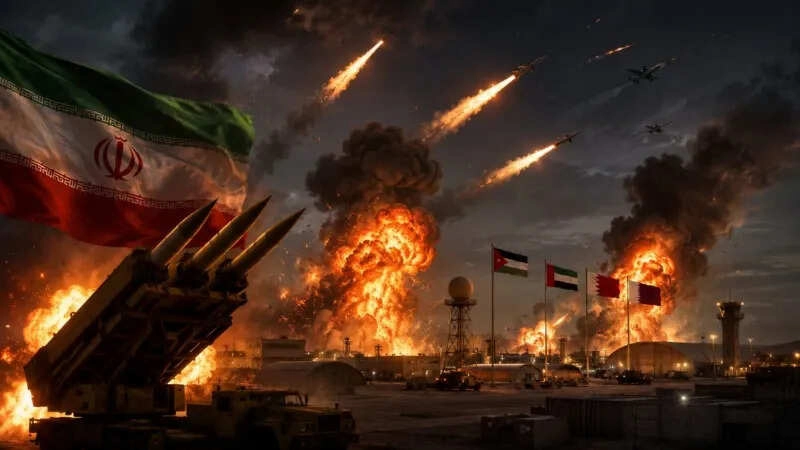
Tensions between the United States and Iran have escalated significantly in recent times, culminating in a major incident that has raised alarms in the international community. Recently, a U.S. military base located in Jordan was targeted in an attack believed to be orchestrated by Iranian forces. This aggression not only highlights the deteriorating relationship between the two nations but also underscores the potential for wider regional instability. The U.S. military presence in the Middle East has long been a point of contention for Iran, which views such bases as symbols of American interference in the region.
The attack on the U.S. base has led to widespread concern among military officials and diplomats. Reports indicate that the strike was executed with precision, suggesting a level of coordination and planning that raises questions about Iran’s capabilities and intentions. In response, the U.S. government has condemned the attack and is considering its next steps in what has become a precarious and volatile situation. The potential for retaliation looms large, as military strategists weigh their options in light of this provocative act.
Moreover, this incident reflects broader geopolitical tensions in the Middle East, where various factions and nations are often at odds with one another. The U.S. has maintained a strong military presence in the region to counteract Iranian influence, which has been marked by supporting proxy groups and exerting power across neighboring countries. As both sides engage in a war of words, the risk of miscalculation remains high, making diplomatic efforts crucial in de-escalating the situation. The international community is watching closely, as any further escalation could lead to significant repercussions not only for the U.S. and Iran but also for the stability of the entire region.