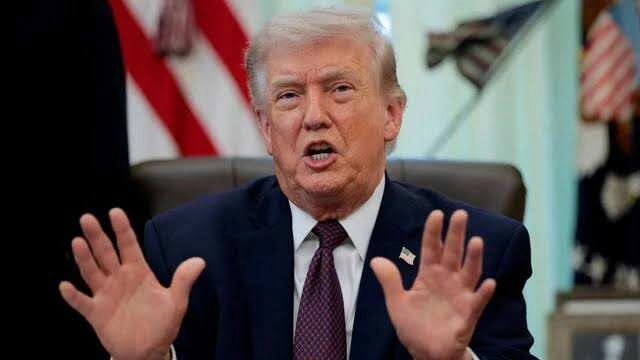
Recently, former U.S. President Donald Trump made headlines with his sharp remarks regarding the funeral of Iran’s Supreme Leader, Ayatollah Ali Khamenei. In a statement that garnered significant attention, Trump emphasized that the U.S. had granted a period of one week for certain actions to be taken. His comments were seen as a pointed jab at the Iranian leadership, suggesting that the United States was closely monitoring developments in Iran and was prepared to respond to any potential threats.
Trump’s remarks reflect the ongoing tensions between the U.S. and Iran, particularly following a series of confrontations and diplomatic standoffs over nuclear agreements and regional influence. The former president’s approach has often been characterized by a confrontational style, and this time was no different. By referencing the week-long ultimatum, Trump aimed to assert the U.S.’s position of strength and to remind both domestic and international audiences of America’s willingness to act decisively.
The statement also underscores the complexities of U.S.-Iranian relations, which have been fraught with conflict and negotiation failures. As the world watches how Iran navigates its leadership transition and the implications of Khamenei’s passing, Trump’s comments serve as a reminder that the geopolitical landscape remains volatile. The former president’s provocative rhetoric continues to resonate within the context of international diplomacy, drawing attention to the delicate balance of power in the Middle East.
In conclusion, Trump’s remarks about Khamenei’s funeral not only highlight his characteristic approach to foreign policy but also reflect broader themes of American assertiveness in global affairs. As the situation develops, both the U.S. and Iran will need to manage their strategies carefully to avoid escalation and to seek avenues for dialogue amidst ongoing tensions.