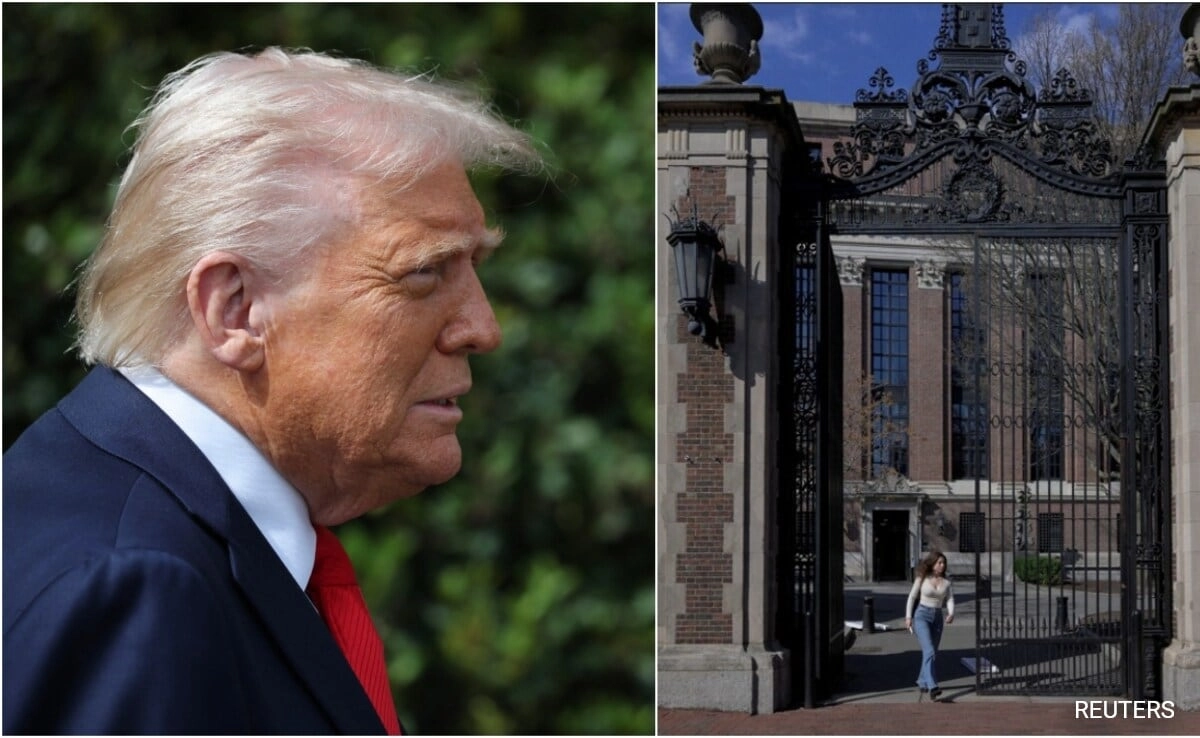
Former President Donald Trump has intensified the ongoing conflict with Harvard University by announcing a ban on federal grants to the institution. This decision is a direct response to what Trump perceives as the university’s failure to uphold values he believes are essential for American education. The move is part of a broader critique of elite institutions, which Trump argues have become bastions of liberal ideology and are out of touch with the values of average Americans.
The ramifications of this ban could be significant, as Harvard is one of the largest recipients of federal funding, including research grants that support various academic programs and initiatives. By cutting off this funding, Trump aims to pressure the university to reconsider its policies and practices, particularly those related to free speech and academic freedom. Critics of the former president argue that this action undermines the independence of academic institutions and could set a troubling precedent for political interference in education.
Supporters of Trump’s decision, however, see it as a necessary step to hold universities accountable for their perceived biases and lack of inclusivity. They argue that federal funding should not support institutions that do not promote a diverse range of perspectives. This situation highlights the ongoing debate over the role of higher education in American society and the persistent divide between differing ideological viewpoints.
As the controversy unfolds, it raises critical questions about the future of federal funding for universities and the potential consequences for academic research and innovation. The impact of Trump’s ban could ripple through various sectors, affecting not only Harvard but also other institutions that rely on federal grants. The situation underscores the tensions between politics and education, revealing how deeply intertwined these realms have become in contemporary America.