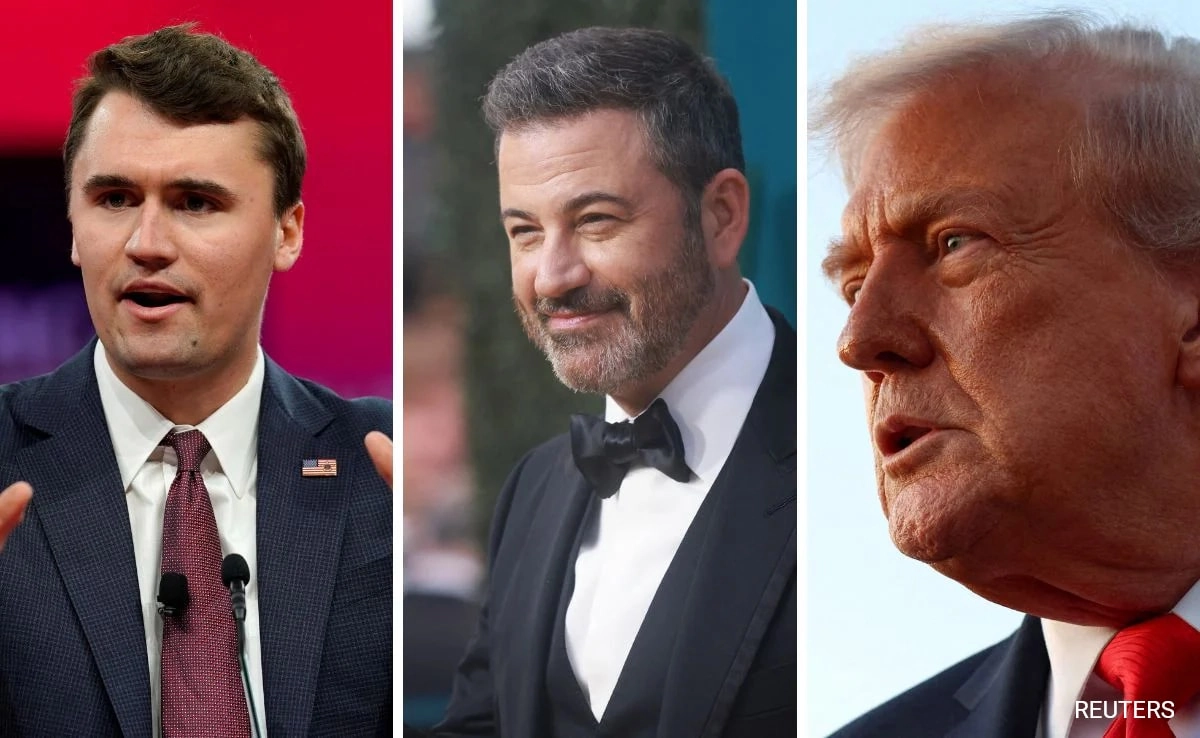
Former President Donald Trump recently issued a stern warning to television networks regarding what he perceives as a trend of negative press coverage. His remarks came in the wake of comedian Jimmy Kimmel’s suspension from ABC, a situation that has sparked considerable debate about media treatment of public figures, particularly those in the political arena. Trump has long been vocal about his disdain for what he describes as biased reporting, claiming that it not only misrepresents facts but also has the potential to influence public opinion unfavorably.
The suspension of Kimmel, known for his late-night talk show where he often critiques political figures, including Trump himself, has raised questions about editorial decisions in the media. Trump took to social media to express his concerns, suggesting that networks should be cautious about how they present their programming and the narratives they choose to promote. He implied that the backlash from viewers over negative portrayals could lead to a decline in ratings and viewer trust, urging media outlets to be more mindful in their reporting.
This situation highlights a growing divide between politicians and the media, where public figures are increasingly wary of how their actions and statements are portrayed. The relationship between Trump and the press has been particularly contentious, with both sides often engaging in a back-and-forth that resonates with their respective audiences. Trump’s warning serves as a reminder that the media landscape is not just about reporting news but also about the impact that narratives can have on public perception and political discourse. As networks navigate this complex relationship, the question remains whether they will heed Trump’s advice or continue to embrace their editorial independence, even in the face of potential backlash.