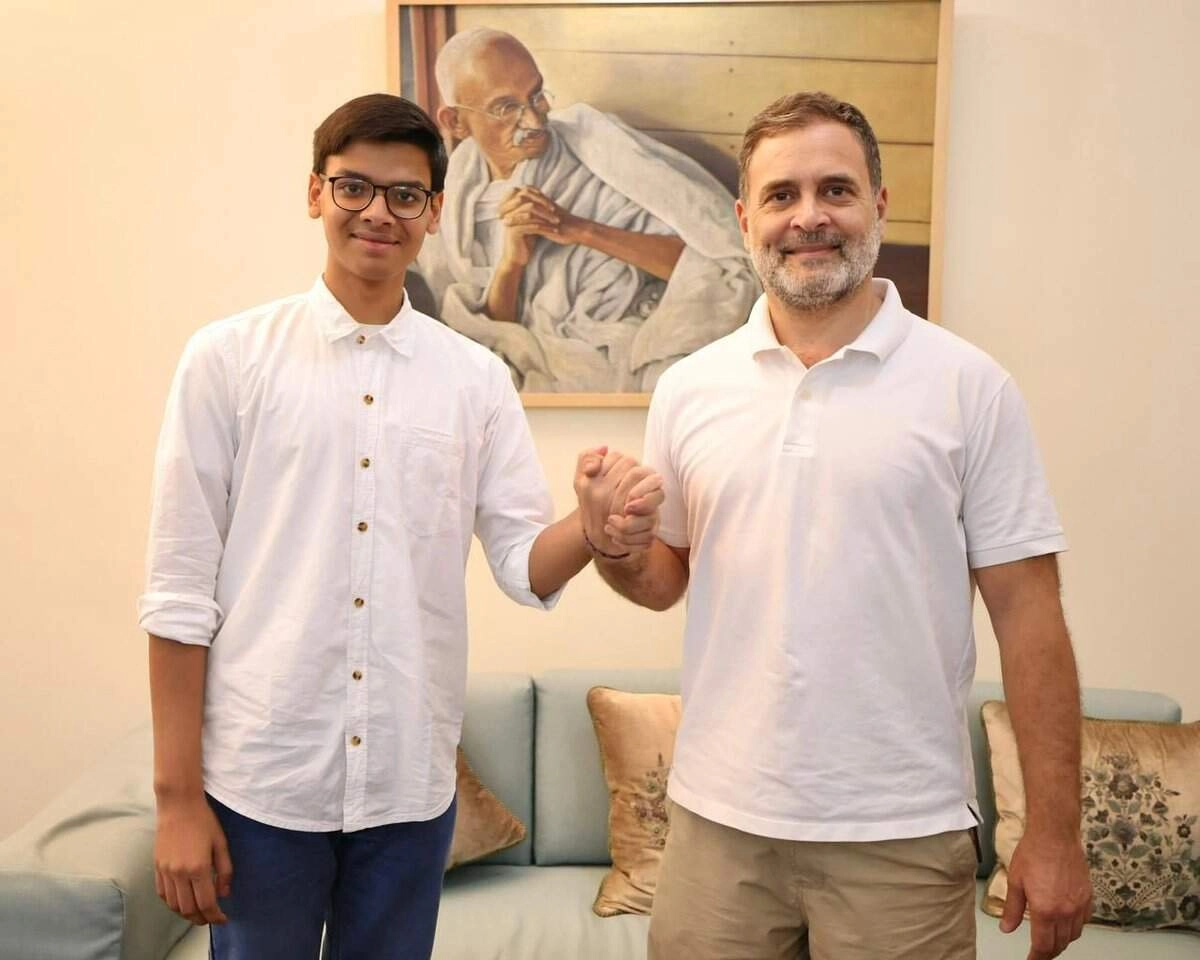
Rahul Gandhi recently met with a student who highlighted the flaws in the CBSE examination system. During this interaction, Gandhi made a notable statement, saying, “An 18-year-old youth has proven to be faster than the CBI.” This remark underscores the frustration and challenges that students face within the current educational framework. The student’s revelations about the examination process have sparked a broader conversation about the need for reform in the CBSE system, which has faced criticism for its lack of transparency and efficiency.
The encounter between Gandhi and the student sheds light on the growing discontent among the youth regarding the educational policies that govern their academic journeys. Many students feel that the examination system is outdated and does not adequately assess their knowledge and skills. Instead, it often leads to unnecessary stress and anxiety, pushing students to the limits in pursuit of grades rather than genuine learning. Gandhi’s acknowledgment of the student’s insights reflects a growing awareness among political leaders about the importance of addressing these educational issues.
Moreover, this meeting serves as a reminder of the power of youth voices in advocating for change. As students become more engaged in discussions about their education, they bring fresh perspectives that can lead to meaningful reforms. The comparison of the student’s quick thinking to the efficiency of the Central Bureau of Investigation (CBI) emphasizes the need for agility and responsiveness within educational institutions. It suggests that if a young individual can identify systemic flaws swiftly, it is imperative for the authorities to take these concerns seriously and work towards improving the examination system for future generations.
In conclusion, the interaction between Rahul Gandhi and the student not only highlights the flaws in the CBSE examination system but also illustrates the potential of youth activism in driving change. By addressing these issues, leaders can foster an educational environment that prioritizes learning and supports the holistic development of students rather than merely focusing on examination scores. This dialogue is crucial for shaping a more equitable and effective educational landscape in India.