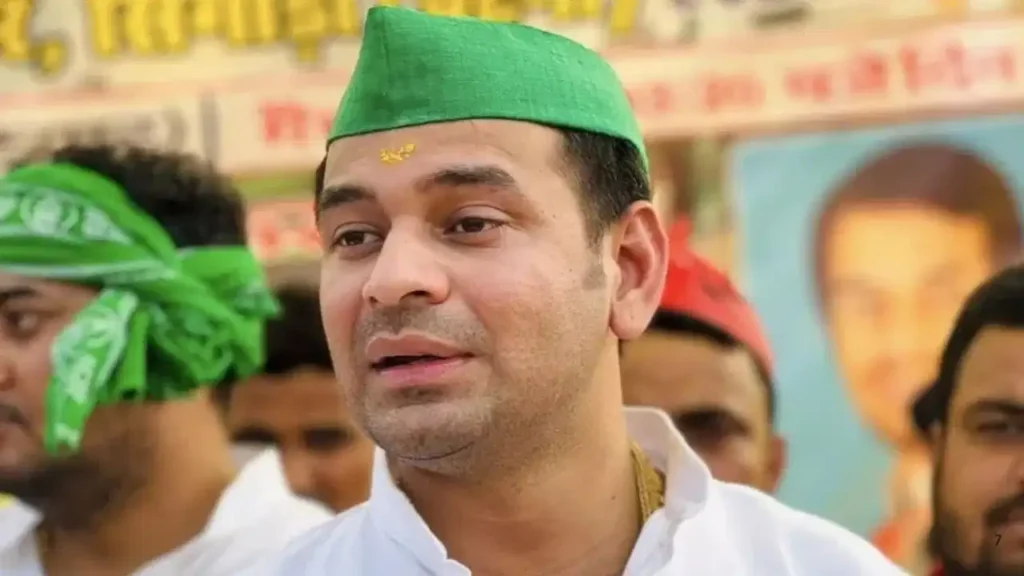
Tej Pratap Yadav, a prominent political figure in Bihar, has been placed in judicial custody for a period of 14 days following his involvement in a protest associated with the Bihar bandh, a statewide strike aimed at addressing various social and political issues. The decision to send him to jail was made by a court late at night, reflecting the seriousness of the situation and the authorities’ response to the unrest caused by the protests.
The Bihar bandh protest, which garnered significant attention, was organized to voice grievances over a range of local issues, including economic challenges, social justice, and governance. Tej Pratap Yadav, who is the son of former Chief Minister Lalu Prasad Yadav, was actively participating in the demonstrations, which were marked by a demand for better governance and accountability from the state government. His arrest has sparked a wave of reactions across the political spectrum, with supporters rallying to demand his release and criticizing the government for its heavy-handed approach to dissent.
Yadav’s judicial custody raises questions about the implications of such actions on political discourse in Bihar. As a prominent leader of the Rashtriya Janata Dal (RJD), his detention could have a significant impact on the party’s activities and its ability to mobilize supporters in the face of ongoing political challenges. The incident has also ignited discussions about the rights to protest and the limits of governmental authority in managing public dissent, a topic that resonates with many citizens who are increasingly vocal about their demands for change.
In the coming days, the legal proceedings surrounding Yadav’s case will be closely monitored, as they may set a precedent for how similar situations are handled in the future. The political landscape in Bihar is already charged, and this incident could further escalate tensions as various factions respond to the unfolding events. As the situation develops, it will be essential to observe the broader implications for civil liberties and political expression in the region.