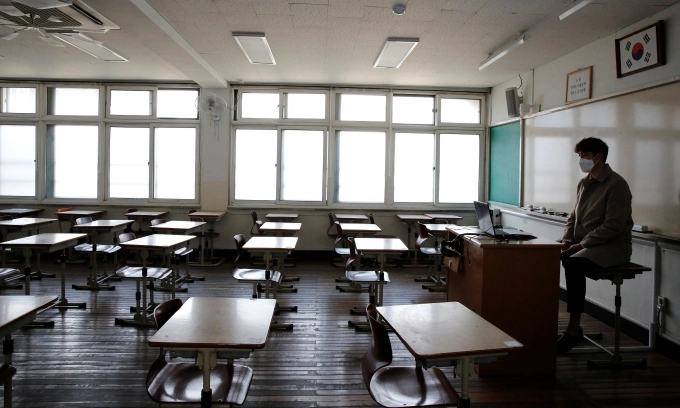
In a poignant reflection of the current educational landscape in South Korea, a recent entrance ceremony held for a single child in Seoul has drawn significant attention to the ongoing crisis of empty classrooms. This unusual event highlights the stark realities faced by many institutions as birth rates in the country continue to decline, leading to a surplus of available classroom space while student enrollment numbers plummet. The phenomenon of empty classrooms is not just a localized issue; it is a national concern that raises questions about the future of education in South Korea.
As the birth rate has reached historic lows, many schools find themselves grappling with a stark contrast between the number of schools and the dwindling student population. In some districts, schools are facing closures, while others are left with classrooms that are nearly empty. This situation not only affects the viability of schools but also impacts the social dynamics of education. A ceremony that traditionally celebrates the commencement of a child’s educational journey now stands as a reminder of the broader demographic challenges facing the nation.
The implications of this crisis extend beyond the immediate concerns of individual schools and students. Policymakers are increasingly tasked with addressing the root causes of declining birth rates, which include economic pressures, shifting social norms, and a growing preference for smaller families. As educational institutions navigate these challenges, there is a pressing need for innovative solutions that can adapt to the changing landscape while still providing quality education for children. The entrance ceremony for a single child may be an isolated incident, but it serves as a powerful symbol of a much larger issue that South Korean society must confront. The future of education, as well as the broader societal fabric, hinges on how effectively these challenges are addressed moving forward.