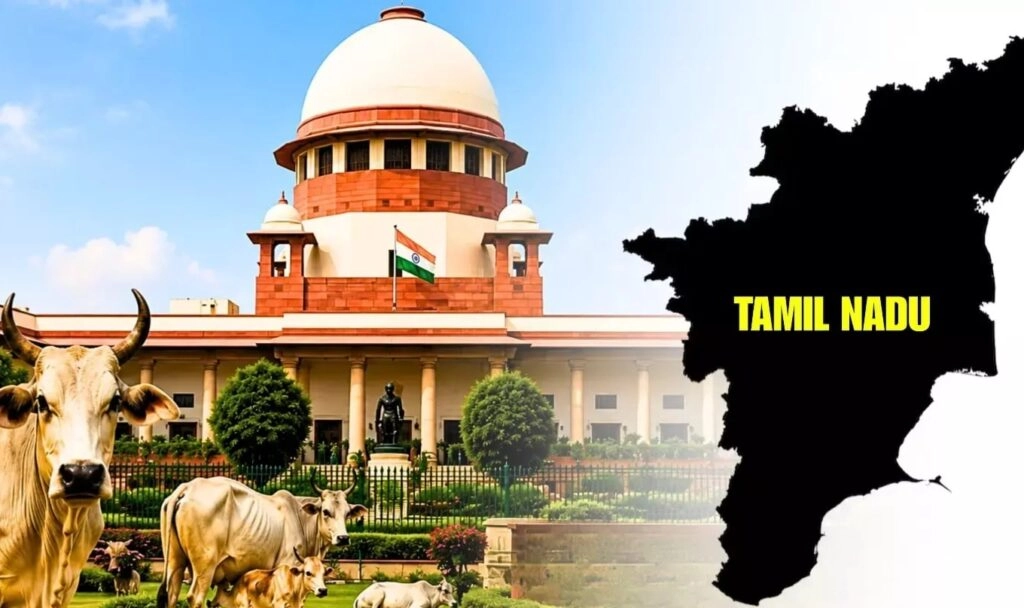
The Supreme Court of India has issued a stay on the statewide ban on cow slaughter that was previously imposed by the Madras High Court. This decision comes as a significant relief for the Tamil Nadu government, which had been grappling with the implications of the High Court’s ruling. The ban, which aimed to prohibit cow slaughter across the state, had raised concerns regarding the livelihood of many individuals involved in the cattle trade and the broader agricultural sector.
The Madras High Court’s order had sparked widespread debate and discussions around animal rights, cultural practices, and economic impacts. Supporters of the ban argued that it was essential for the protection of cows, which hold a sacred status in Hindu culture. Conversely, opponents contended that the prohibition could adversely affect various communities that rely on livestock for their livelihood. The Supreme Court’s intervention reflects its role in balancing these competing interests while considering the legal framework surrounding cattle slaughter in the country.
In its ruling, the Supreme Court emphasized the need for a thorough examination of the legal and social ramifications of the ban. The court’s decision to stay the High Court’s order allows for continued dialogue and deliberation on the issue, providing the Tamil Nadu government with the space to create policies that address the concerns of both animal welfare advocates and those reliant on the cattle industry. This stay is not only a temporary relief for the government but also an invitation for a more nuanced conversation about the complexities surrounding cow slaughter in India, a topic that is deeply interwoven with cultural, economic, and ethical dimensions.
As the case proceeds, it will likely prompt further legal scrutiny and public discourse regarding the rights of individuals and animals in the context of agricultural practices. The Supreme Court’s involvement signals its recognition of the multifaceted nature of this issue, highlighting the importance of finding a balanced approach that respects cultural sentiments while also considering the economic realities faced by various communities. Ultimately, this ruling will play a pivotal role in shaping the future of cattle management and slaughter regulations in Tamil Nadu and potentially set a precedent for similar cases across India.