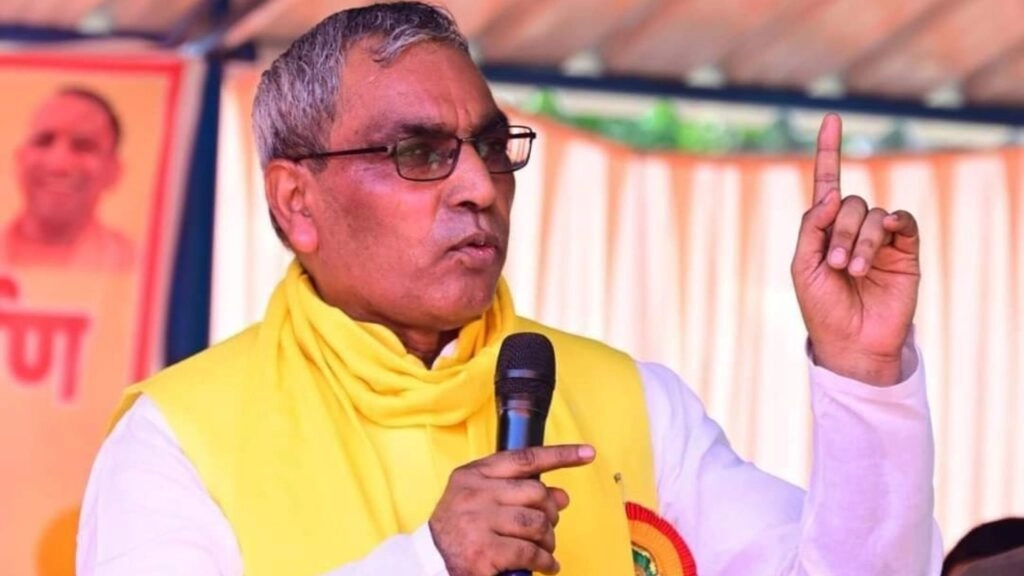
In a recent statement, OP Rajbhar, a prominent political figure, made headlines with his remarks regarding the complexities of seat-sharing arrangements in Uttar Pradesh. He likened the process to a scenario where individuals request a gun license and, in return, receive a pistol. This analogy reflects the intricate and often contentious nature of political negotiations and alliances in the state. Rajbhar’s comments highlight the challenges faced by parties when attempting to strike deals that are mutually beneficial, especially in a politically charged environment like Uttar Pradesh, which has a diverse electorate and a history of intense electoral battles.
Rajbhar’s analogy serves as a metaphor for the expectations and realities of political collaborations. In the world of politics, particularly in a state as significant as Uttar Pradesh, parties often enter negotiations with high hopes and specific demands. However, the outcomes can sometimes fall short of those expectations, much like receiving a pistol when one anticipated a more comprehensive solution. Such comments underscore the necessity for clarity and transparency in political dealings, as well as the importance of establishing trust among coalition partners.
As Uttar Pradesh gears up for upcoming elections, the dynamics of seat-sharing will be crucial for both major and minor parties. The state has a vast and varied demographic, which means that successful alliances can significantly influence electoral outcomes. Rajbhar’s remarks not only reflect his perspective on the current political landscape but also serve as a reminder of the complex interplay of interests that characterize electoral politics in India. In this context, the need for effective communication and negotiation strategies becomes paramount for political entities aiming to secure their foothold in the competitive arena of Uttar Pradesh politics.