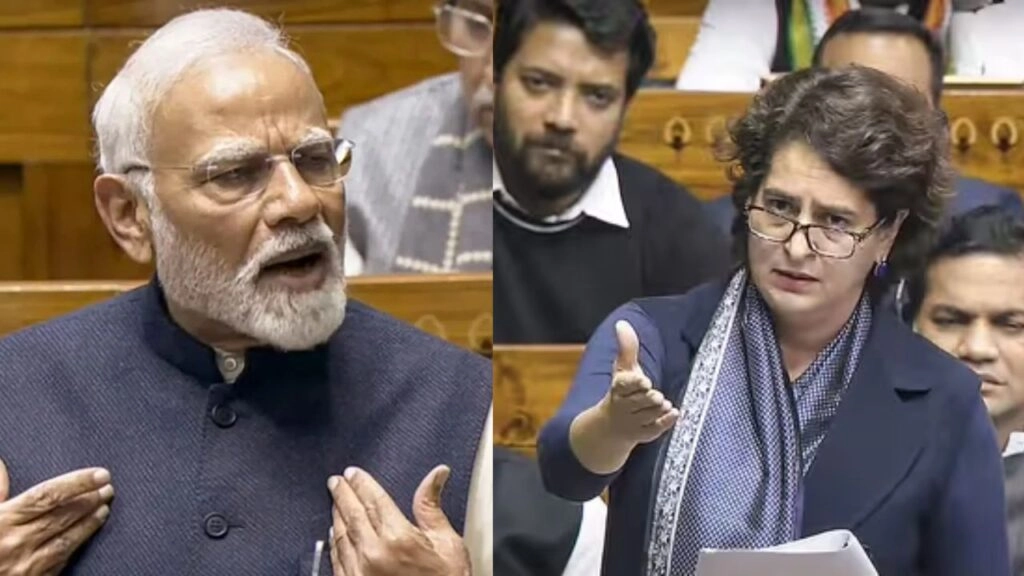
Priyanka Gandhi’s recent remarks regarding “Vande Mataram” have sparked a lively debate, raising questions about whether the topic is being approached from a political angle or as a genuine discussion. The song, which holds significant cultural and emotional value in India, has often been a focal point in political discourse, particularly in the context of national identity and patriotism. The Bharatiya Janata Party (BJP), known for its emphasis on nationalism, has historically utilized “Vande Mataram” as a symbol to rally support, framing it as an essential part of Indian identity.
In her statements, Priyanka Gandhi has urged for a more inclusive understanding of what “Vande Mataram” represents, suggesting that it should transcend mere political rhetoric. Her approach invites a broader conversation about national identity that encompasses diverse perspectives and experiences. This stance could be perceived as a challenge to the BJP’s narrative, potentially creating a political opening for the Congress party as it seeks to redefine its image and reconnect with voters.
The timing of Gandhi’s comments is particularly significant, as India approaches crucial elections. By framing the discussion around “Vande Mataram” in a more inclusive light, she aims to resonate with a wider audience, potentially appealing to those who may feel alienated by the BJP’s more singular interpretation of nationalism. The ongoing debate highlights the complexities of patriotism in India and underscores the importance of dialogue that respects the country’s diverse cultural fabric. Ultimately, this conversation could have far-reaching implications for political dynamics in the lead-up to the elections.