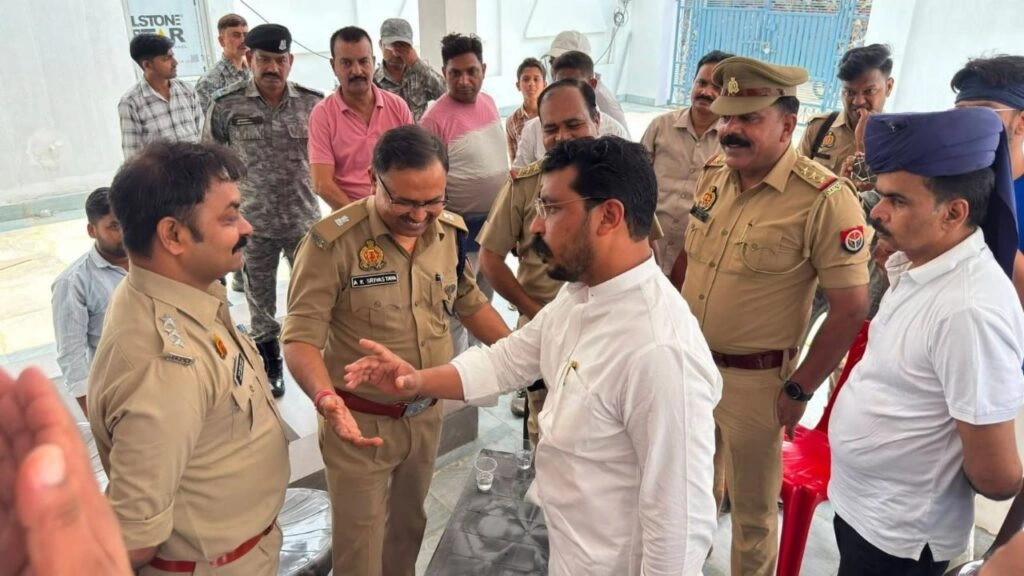
Chandrashekhar, a prominent political figure, was poised to embark on his much-anticipated ‘Satta Parivartan Yatra,’ a campaign aimed at mobilizing public support and addressing pressing issues within his constituency. This initiative was intended to be a significant step in his political journey, as he aimed to connect with the masses and promote his vision for change. However, just as he was about to set out on this critical mission, the police intervened and halted his departure, preventing him from leaving his residence.
The police’s intervention raised questions about the motivations behind such a decision. The authorities may have cited potential concerns regarding public safety, law and order, or other legal stipulations that could hinder the progress of the Yatra. Nevertheless, this action sparked a wave of criticism from his supporters and various political analysts, who viewed it as an infringement on democratic rights and a tactic to suppress dissent. Chandrashekhar’s planned journey was not merely a political campaign; it represented a broader movement for reform in governance and accountability.
As the situation unfolded, it became clear that the clash between Chandrashekhar and the authorities was emblematic of a larger struggle within the political landscape. His supporters rallied around him, expressing their discontent with the police’s actions and calling for greater freedom of expression and political engagement. The incident highlighted the tensions between political leaders and law enforcement, raising important discussions about the balance between maintaining public order and allowing political expression in a democratic society.
In the wake of this incident, many were left wondering about the implications for future political activities in the region. Would this prompt other leaders to reconsider their plans, or would it galvanize more support for Chandrashekhar and his cause? Regardless of the outcome, the interruption of the ‘Satta Parivartan Yatra’ served as a powerful reminder of the challenges faced by those seeking to enact change and the ongoing necessity for vigilance in protecting democratic processes.