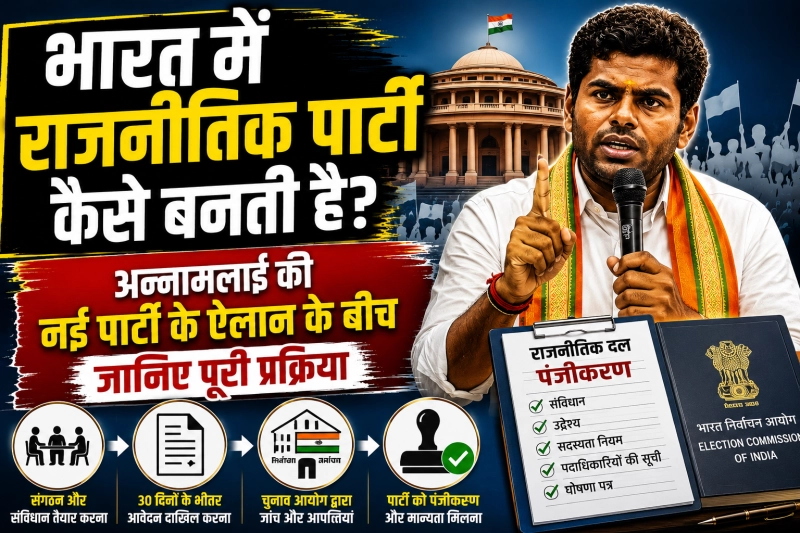
The formation of a political party in India involves a structured process governed by the Representation of the People Act, 1951, and various guidelines set forth by the Election Commission of India. The journey typically begins with an individual or a group of like-minded individuals deciding to come together based on shared ideologies, goals, or political agendas. This initial stage often includes discussions about the party’s objectives, policies, and the target demographic it aims to serve. For instance, the recent announcement of Annamalai’s new political party reflects a culmination of efforts to provide a platform that resonates with specific voter concerns and aspirations.
Once the foundational ideas are set, the next step is to officially register the party. This requires drafting a constitution that outlines the party’s structure, rules, and regulations, as well as its vision and mission. The party must also choose a name that is unique and not similar to any existing parties to avoid confusion. An application for registration is then submitted to the Election Commission, along with necessary documents, such as the party’s constitution, a list of office bearers, and details about its organizational structure. The Election Commission reviews these submissions to ensure compliance with legal requirements.
After receiving approval from the Election Commission, the party can begin its political activities. This includes recruiting members, establishing local and state-level units, and launching campaigns to raise awareness about the party’s agenda. The announcement of Annamalai’s party likely included strategic outreach efforts to engage potential supporters and articulate the party’s position on various issues. Furthermore, the party would need to participate in elections to gain a foothold in the political landscape, which involves candidate selection, campaigning, and mobilizing voters.
In summary, the formation of a political party in India is a multifaceted process that requires careful planning, legal compliance, and effective communication with the electorate. The emergence of new parties like Annamalai’s highlights the dynamic nature of Indian politics, where new voices and ideas continually seek to influence governance and represent the interests of citizens. This process not only contributes to the vibrancy of democracy but also ensures that diverse perspectives are considered in the political arena.