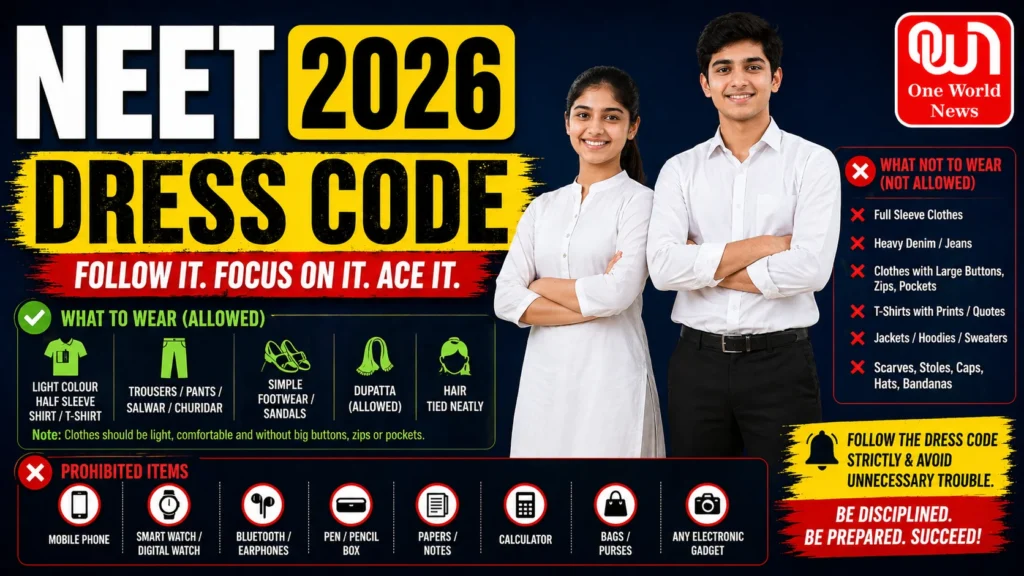
The NEET (National Eligibility cum Entrance Test) Dress Code for 2026 has been established to ensure uniformity and prevent any unfair advantages during the examination. This dress code applies to all candidates, both boys and girls, and outlines specific guidelines on what is acceptable to wear on the exam day. Adhering to these rules is crucial, as failure to comply may result in candidates being barred from entering the examination hall.
For boys, the dress code typically allows casual wear, but there are restrictions on wearing certain items. Candidates are advised to wear light and comfortable clothing, such as a simple T-shirt paired with trousers. It is important to avoid any garments that have elaborate designs, patterns, or pockets, as these could potentially conceal prohibited items. Additionally, boys should refrain from wearing accessories like belts, jackets, or any metallic items that might trigger security alarms during the entry process.
Similarly, the dress code for girls emphasizes modesty and simplicity. Acceptable attire includes a salwar suit, kurta with leggings, or simple ethnic wear. Girls are also encouraged to avoid wearing heavy jewelry, accessories, or shoes with thick soles. Footwear guidelines suggest that candidates wear open-toed sandals or simple shoes without any embellishments. This is to ensure that the focus remains on the exam and to maintain a standardized environment for all test-takers.
The National Testing Agency (NTA) has implemented these dress code guidelines to create a fair examination setting and to ensure that all candidates are treated equally. It is crucial for candidates to review these regulations carefully before the examination day to avoid any last-minute issues. By following the prescribed dress code, candidates can help ensure a smooth entry into the examination hall and concentrate fully on performing their best on the test. Compliance with these guidelines not only reflects discipline but also respects the integrity of the examination process.