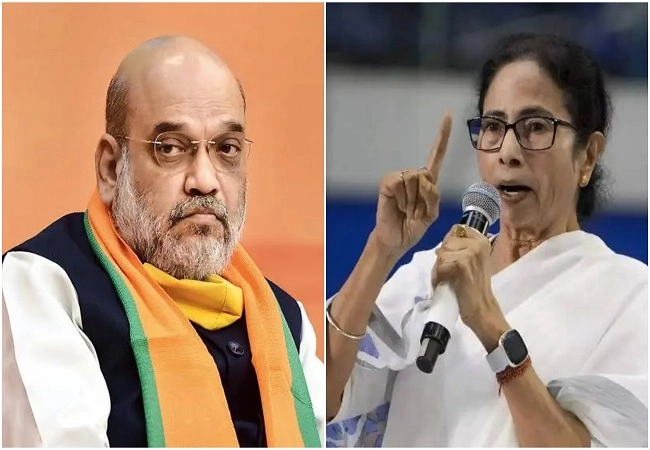
Mamata Banerjee has made a striking observation regarding Amit Shah, suggesting that there is a palpable sense of fear in his demeanor. She likens this fear to the characters from the Indian epic Mahabharata, specifically referencing Duryodhana and Dushasan. In her statement, she implies that Shah embodies the traits of these two infamous figures: Duryodhana, known for his ambition and enmity, and Dushasan, infamous for his cruelty. This analogy serves to underscore Banerjee’s perception of Shah as a figure who wields power with a sense of menace and aggression.
In the context of Indian politics, Banerjee’s remarks reflect her broader criticism of the ruling party and its leaders. By invoking mythological characters, she draws a parallel between contemporary political dynamics and age-old narratives of power struggles and moral dilemmas. This rhetorical strategy not only captures the attention of her audience but also positions her as a defender of justice against perceived tyranny.
The vivid imagery of terror in Shah’s eyes, as described by Banerjee, paints a picture of a leader who is not only powerful but also deeply anxious about his authority. This perspective invites further examination of the political climate in India, where debates over governance, democracy, and leadership are increasingly contentious. Banerjee’s comments resonate with many who feel disillusioned by the current political landscape, suggesting that the fear of losing power can lead to authoritarian tendencies.
Ultimately, Banerjee’s characterization of Amit Shah serves as a rallying cry for her supporters and a warning to those who might overlook the implications of such leadership. By framing the political discourse in terms of mythological conflict, she aims to galvanize public sentiment and encourage a critical evaluation of the ruling party’s actions. Whether one agrees with her assessment or not, her words contribute to the ongoing dialogue about power, fear, and the responsibilities of leadership in contemporary India.