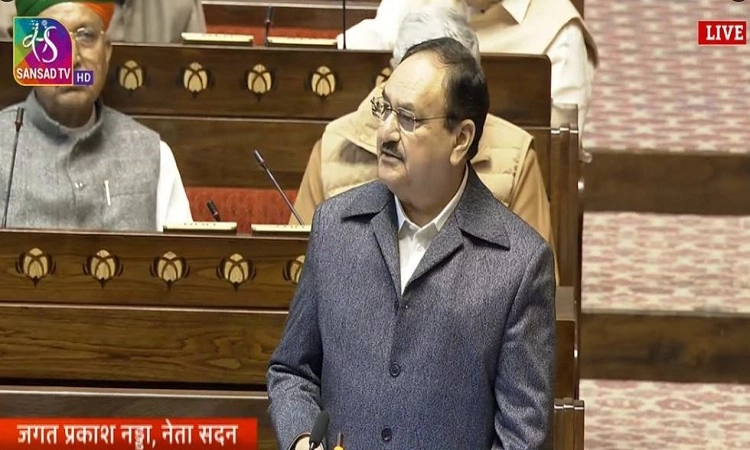
In a recent discussion in the House regarding the national anthem “Vande Mataram,” JP Nadda articulated the stance of his party, emphasizing that their intent is not to defame Jawaharlal Nehru, the first Prime Minister of India. Rather, the objective is to foster a deeper understanding and appreciation of the anthem’s significance in the context of India’s independence and cultural identity. Nadda’s comments are part of a larger discourse on the role of “Vande Mataram” in uniting the nation and inspiring patriotism among citizens.
The anthem, originally written by Bankim Chandra Chatterjee, holds a pivotal place in India’s freedom struggle and is often seen as a symbol of national pride. Nadda highlighted that while Nehru’s contributions to the nation are acknowledged, it is equally important to recognize the historical and emotional resonance of “Vande Mataram” in contemporary India. The discussion aims to remind citizens of the values and ideals for which the anthem stands, encouraging a sense of unity amidst the diverse cultural landscape of the country.
Moreover, Nadda’s remarks sparked a broader conversation about the necessity of revisiting historical narratives and understanding their implications on present-day society. By focusing on “Vande Mataram,” the objective is not only to honor the past but also to inspire future generations to uphold the principles of patriotism and national integrity. The House’s dialogue serves as a reminder of the enduring power of music and poetry in shaping the collective consciousness of a nation, urging citizens to reflect on their shared heritage and responsibilities towards their country.
In conclusion, the discussion surrounding “Vande Mataram” and its association with Nehru is emblematic of the ongoing efforts to redefine and reinforce India’s national identity. By reframing the conversation, leaders like JP Nadda seek to cultivate a renewed sense of pride and belonging among citizens, ensuring that the anthem continues to resonate as a beacon of hope and unity in the ever-evolving narrative of India’s history.