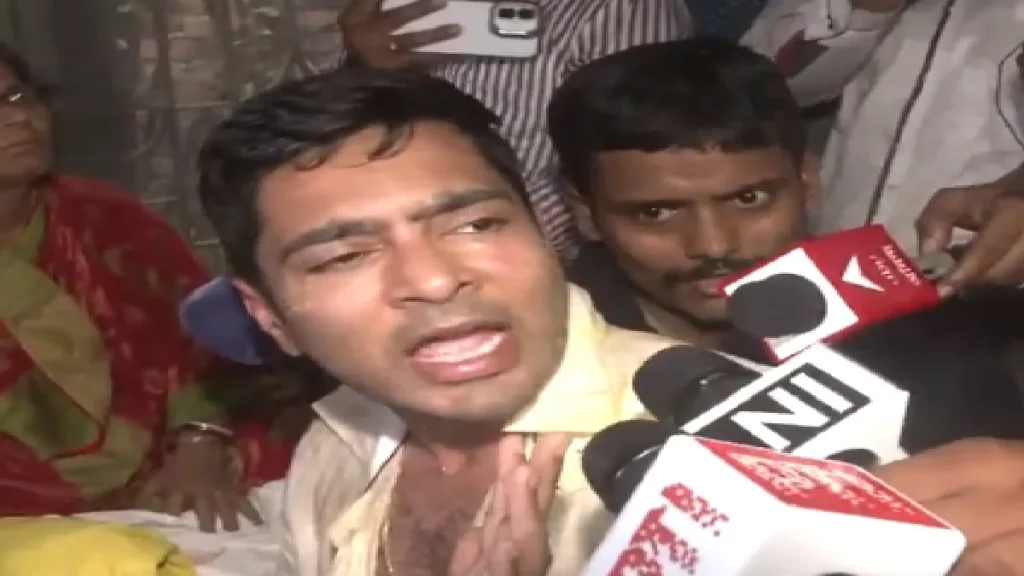
In a recent incident that has sparked considerable controversy, five individuals have been arrested in connection with the attack on Abhishek Banerjee, the nephew of West Bengal Chief Minister Mamata Banerjee. The attack has drawn significant media attention and political reactions, highlighting the ongoing tensions within the state’s political landscape. Abhishek Banerjee, who is also a prominent leader in the Trinamool Congress party, was targeted during an event, leading to concerns about the safety of political figures amidst rising hostilities.
Dilip Ghosh, a senior leader of the Bharatiya Janata Party (BJP) and former president of its West Bengal unit, commented on the incident with a provocative statement questioning Abhishek Banerjee’s intentions. Ghosh suggested that the attack might have been an attempt by Abhishek to portray himself as a hero or a victim, insinuating that such incidents are sometimes orchestrated for political gain. His remarks reflect the competitive and often adversarial nature of the political environment in West Bengal, where parties frequently engage in blame games and accusations.
The arrests of the five suspects have raised questions about the motivations behind the attack and the potential involvement of political rivalries. As investigations continue, the incident serves as a reminder of the volatile atmosphere that can surround political events in India. The relationship between the ruling Trinamool Congress and the opposition BJP has been marked by escalating tensions, and this attack is likely to further complicate the dynamics as both parties prepare for future electoral battles. The situation is being closely monitored, as it could have broader implications for the safety of political leaders and the conduct of public life in the region.