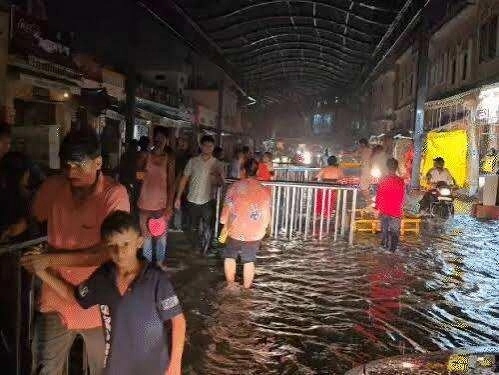
The monsoon season in the country has been progressing at a slower pace, resulting in a significant rainfall deficit of 23% compared to the usual levels for this time of year. This delay in the monsoon’s arrival and its reduced intensity has raised concerns among farmers and those dependent on rain for their livelihoods. The uneven distribution of rainfall has led to varying conditions across different regions, with some areas experiencing drought-like situations while others face the brunt of heavy rains.
In particular, the states of Uttar Pradesh and Bihar are under alert for heavy rainfall, which could lead to severe weather conditions. The local authorities have issued warnings to residents to remain vigilant and prepared for potential flooding and other associated risks. The situation is especially dire in the northeastern states, where heavy monsoon rains have caused severe flooding, displacing thousands and causing significant damage to infrastructure and agriculture.
As the government and disaster management agencies work to address the challenges posed by these weather patterns, it is crucial for communities to stay informed and take necessary precautions. The contrasting weather conditions across the country highlight the impact of climate variability and the need for effective water management strategies to mitigate adverse effects in the future. The situation remains dynamic, and monitoring will be essential as the monsoon continues to unfold in the coming weeks.