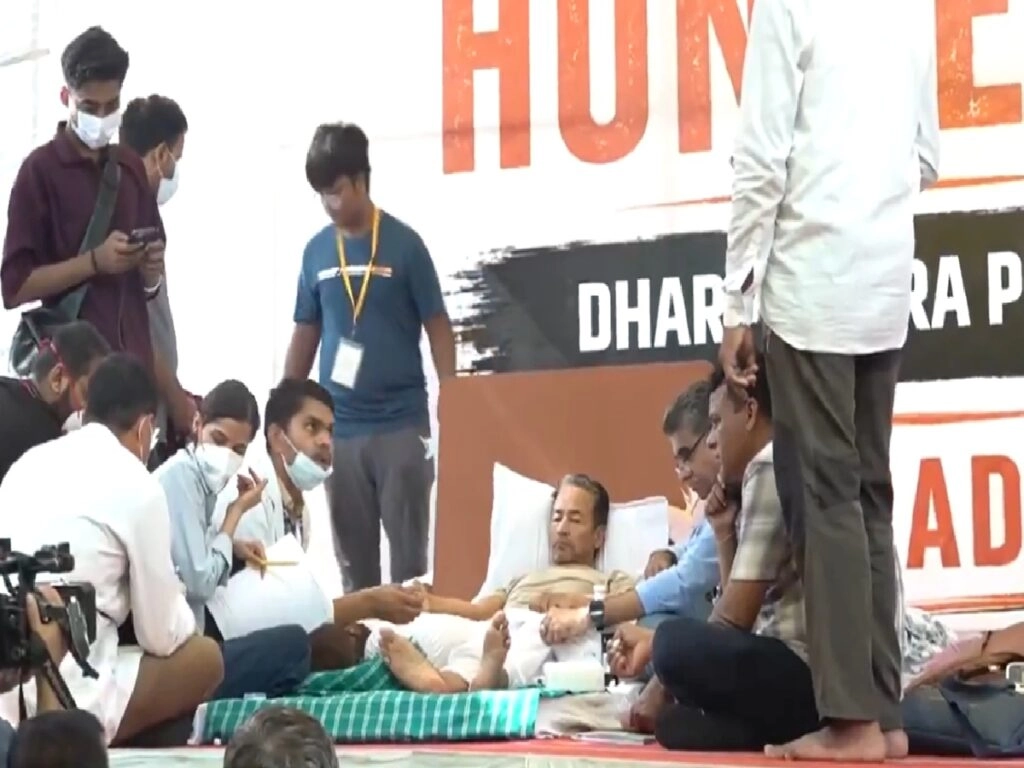
Sonam Wangchuk, the prominent social activist and engineer known for his work in environmental sustainability and education reform in Ladakh, recently undertook a hunger strike to draw attention to pressing issues related to climate change and the preservation of the fragile ecosystem in his region. His actions have garnered widespread media attention and public interest, prompting legal scrutiny regarding his health and well-being during the protest. In response to concerns raised about Wangchuk’s condition, the Delhi High Court intervened to ensure that his health is monitored regularly.
The court emphasized the importance of daily health assessments for Wangchuk as he continues his hunger strike. This directive reflects a broader concern for the potential risks associated with prolonged fasting, particularly for someone who is advocating for significant social and environmental causes. The judges highlighted the need for a balanced approach, allowing Wangchuk to express his dissent while also ensuring that his physical health does not deteriorate to a critical level. The court’s decision underscores the legal responsibilities of authorities to safeguard the health of individuals engaging in protests, particularly when such actions can lead to serious health complications.
Wangchuk’s hunger strike is not merely a personal protest; it symbolizes a larger movement calling for urgent action against climate change and the degradation of natural resources in Ladakh. His activism has been pivotal in raising awareness about the challenges faced by local communities due to environmental changes. As the Delhi High Court monitors his health, it also sends a message about the importance of civic engagement and the role of the judiciary in protecting the rights of activists. The court’s involvement serves as a reminder that while activism is crucial for societal change, the health and safety of individuals must remain a priority. This situation highlights the delicate balance between the right to protest and the need for humane treatment of individuals who engage in such acts of civil disobedience.