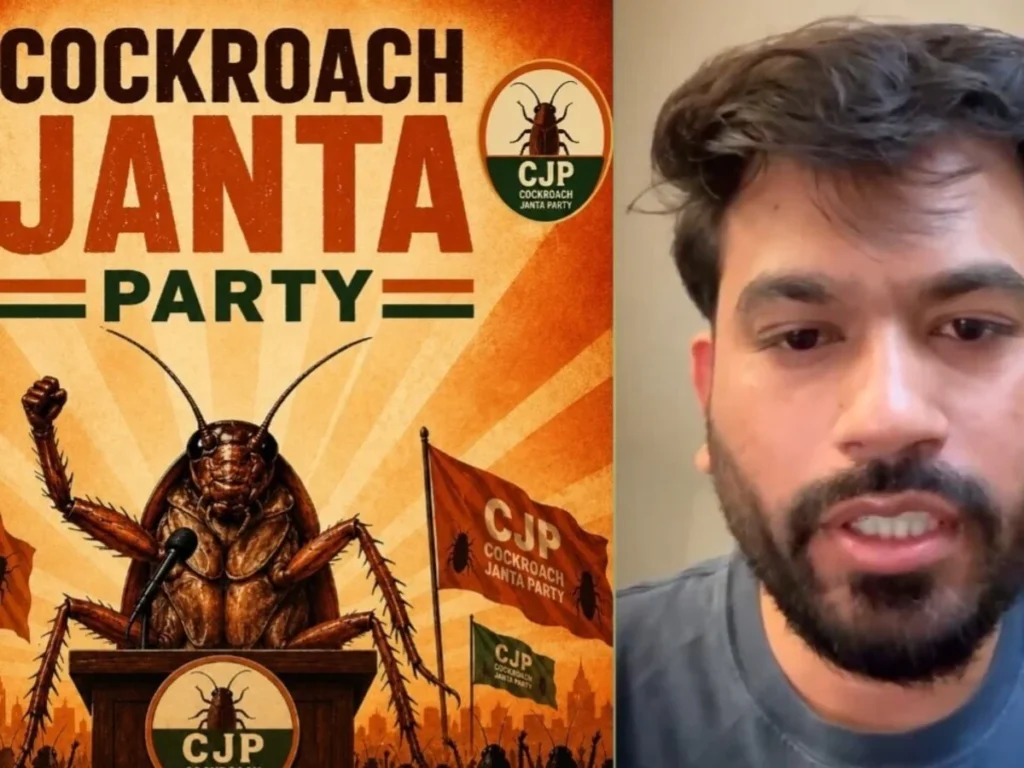
In the ever-evolving landscape of Indian politics, the emergence of the “Cockroach Janta Party” has captured public attention, particularly in the realm of social media. This unconventional political entity has become a platform for engaging in heated discussions and confrontations, reflecting the current state of political discourse in the country. A recent episode in this ongoing saga involved Abhijit Dipke’s astute rebuttal to Kiren Rijiju’s provocative comments regarding George Soros and Pakistan. Rijiju’s remarks were perceived as an attempt to discredit political opponents by linking them to external influences and agendas, stirring up a considerable amount of controversy.
In his response, Dipke effectively turned the tables on Rijiju, challenging not only the validity of his claims but also the broader implications of such rhetoric in political dialogue. By articulating his arguments with clarity and precision, Dipke highlighted the dangers of scapegoating individuals or groups in the political arena, particularly using foreign entities as a means of deflection. His counterattack resonated with many who are wary of divisive tactics employed in politics, emphasizing the need for constructive discourse rather than sensationalism and fear-mongering.
The incident encapsulates a larger trend within Indian politics, where social media serves as a battleground for ideas and narratives. The rise of platforms like Twitter and Facebook has enabled political figures to communicate directly with the public, often bypassing traditional media filters. This shift has led to an increase in confrontational exchanges, as seen in the clash between Dipke and Rijiju, where hashtags and viral posts can significantly influence public perception and political fortunes. As political battles unfold in the digital sphere, the Cockroach Janta Party’s engagement in these discussions underscores the shifting dynamics of political communication in modern India.
Ultimately, this saga is more than just a clash between two political figures; it reflects the broader ideological divides within Indian society. The use of social media for political discourse allows for rapid dissemination of information and opinions, but it also raises questions about accountability and the responsibilities of public figures. As the Cockroach Janta Party continues to navigate these complex waters, the implications of this political battle extend beyond individual confrontations, shaping the future of political engagement in India.