The Bharatiya Janata Party (BJP) has been strategically maneuvering to create a complex political landscape in Bengal, which many analysts refer to as a “Chakravyuh.” This term, borrowed from ancient Indian mythology, symbolizes a complicated trap from which escape is difficult. In this context, the BJP’s actions can be seen as an attempt to corner the ruling Mamata Banerjee government by employing a mix of political tactics, grassroots mobilization, and targeted messaging that resonates with the local populace. By leveraging various issues that affect the everyday lives of citizens, such as economic development, law and order, and social justice, the BJP aims to undermine the credibility of the current administration.
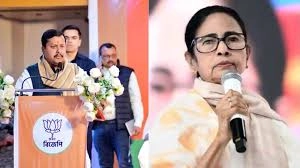
Nitin Naveen, a prominent BJP leader, has played a pivotal role in this strategy. His efforts have been focused on highlighting the shortcomings of the Mamata government while simultaneously presenting the BJP as a viable alternative. Through a series of well-coordinated campaigns, Naveen has sought to galvanize public opinion against the state’s leadership, emphasizing how the central government’s initiatives could benefit Bengal. This has involved not only public rallies and meetings but also a robust social media presence designed to engage younger voters who might be disillusioned with the existing political establishment.
The political landscape in Bengal has become increasingly polarized, with the BJP positioning itself as the main opposition force. This shift has resulted in heightened tensions between party cadres and supporters of the Trinamool Congress (TMC), the ruling party. The BJP’s attempts to capitalize on issues such as unemployment, corruption, and inadequate public services have begun to resonate with certain segments of the population, particularly in rural areas where discontent with the TMC’s governance is palpable. The ongoing battle for political dominance in Bengal not only reflects the BJP’s ambitions but also highlights the challenges faced by Mamata Banerjee as she strives to maintain her party’s hold on power.
In summary, the BJP’s strategic creation of a “Chakravyuh” in Bengal, spearheaded by leaders like Nitin Naveen, illustrates the complexities of regional politics in India. As the party continues to push its agenda, the Mamata government must navigate this intricate political terrain to retain its influence. The outcome of this political struggle will have significant implications not only for Bengal but also for the broader political dynamics of the country as the BJP seeks to expand its footprint in regions traditionally dominated by regional parties.