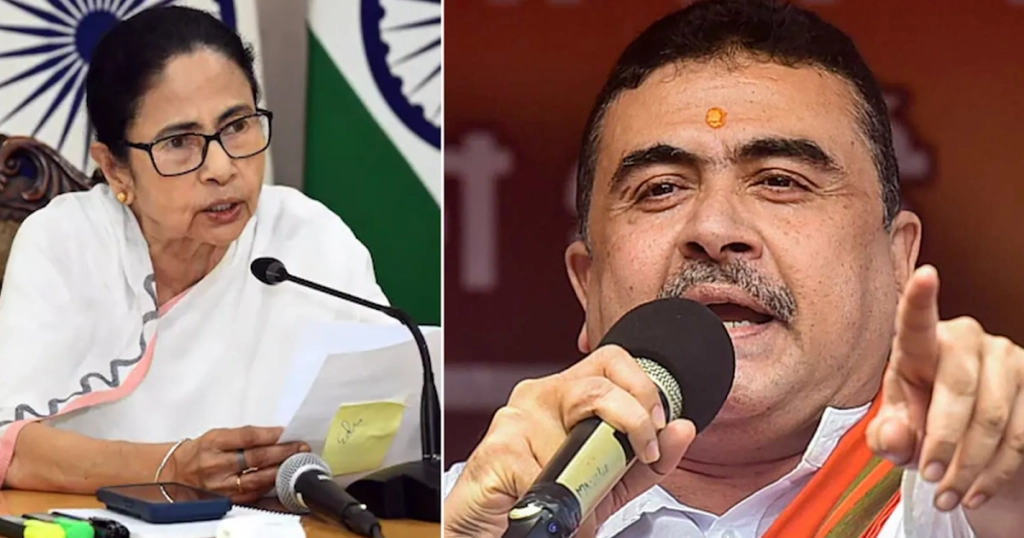
The political landscape of West Bengal has become increasingly charged as the spotlight shifts to the Bhawanipur constituency, where Chief Minister Mamata Banerjee is set to face off against her formidable opponent, Shubhendu Adhikari. This battle is not just a local contest; it represents a significant clash of ideologies and political ambitions in the state. Mamata Banerjee, the leader of the Trinamool Congress (TMC), has been a dominant force in West Bengal politics, known for her grassroots connection and fiery rhetoric. Her leadership during the COVID-19 pandemic and various welfare schemes have endeared her to many voters, yet she also faces criticism regarding governance and issues of law and order.
On the other side, Shubhendu Adhikari, a former TMC leader who switched allegiance to the Bharatiya Janata Party (BJP), brings a fresh perspective and considerable political experience to the table. His strategic move to the BJP has energized a significant segment of voters who are disillusioned with the ruling party. Adhikari’s campaign focuses on development, governance, and the promise of a more robust administrative framework. His previous role as a minister in the state government lends him credibility among constituents who remember his contributions to various projects.
As the election date approaches, both candidates are ramping up their campaigns, employing various strategies to connect with voters. While Mamata Banerjee relies on her established political machinery and her image as a fighter for the common person, Adhikari is working to position himself as a viable alternative, harnessing the BJP’s national influence and resources. The outcome of this electoral battle in Bhawanipur could have far-reaching implications, not just for the candidates involved but also for the broader political dynamics in West Bengal. With each passing day, the stakes are rising, and the question remains: who will ultimately emerge victorious in this high-stakes contest?