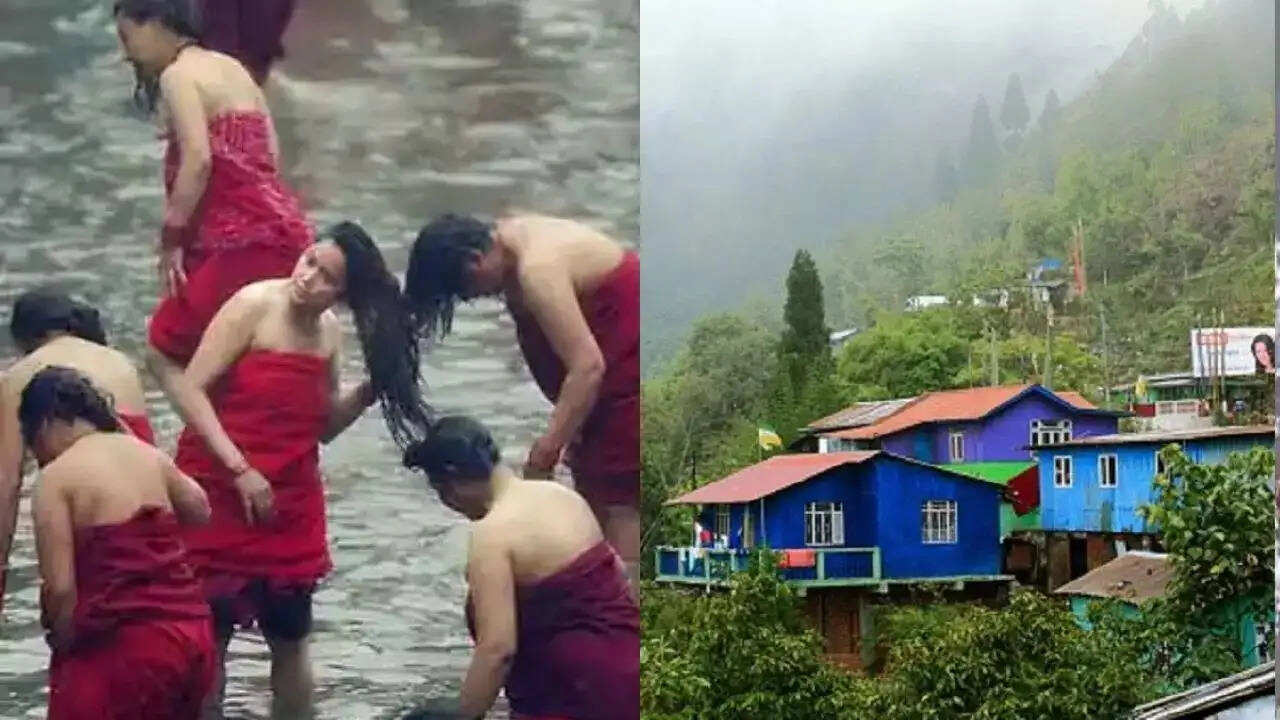
In the picturesque region of Himachal Pradesh, a unique tradition unfolds during the month of Sawan, captivating both locals and visitors alike. In a quaint village, women observe a remarkable fast that involves a strikingly unconventional practice: they do so without wearing clothes. This curious custom is not merely an act of defiance or a trend; it is steeped in deep cultural significance and carries a rich historical narrative that has been passed down through generations.
The origins of this tradition can be traced back to ancient beliefs and rituals associated with the rainy season. Sawan, known for its heavy monsoon rains, is considered a time of renewal and purification. The practice of fasting without clothes symbolizes a return to nature and a shedding of material possessions, allowing individuals to connect more deeply with the divine. For these women, the act is both a spiritual journey and a way to honor the earth’s bounty during this crucial agricultural period. The absence of clothing is seen as a form of liberation, representing freedom from societal norms and expectations.
Moreover, this unique custom fosters a strong sense of community among the women of the village. During this time, they gather together, sharing their experiences and supporting one another in their spiritual endeavors. This camaraderie not only strengthens their bonds but also reinforces their collective identity as custodians of this age-old tradition. As outsiders observe this fascinating practice, they are often drawn into the deeper meanings and values that it represents, encouraging a broader understanding of cultural diversity and the myriad ways in which communities express their spirituality.
In essence, the custom observed in this Himachal village during Sawan is a profound manifestation of faith, community, and the resilience of tradition. It serves as a reminder of the complex interplay between culture and spirituality, revealing how practices can evolve while remaining deeply rooted in the values and beliefs of a community. As more people become aware of such unique customs, there is an opportunity for greater appreciation and respect for the diverse tapestry of human experiences that exist across the globe.