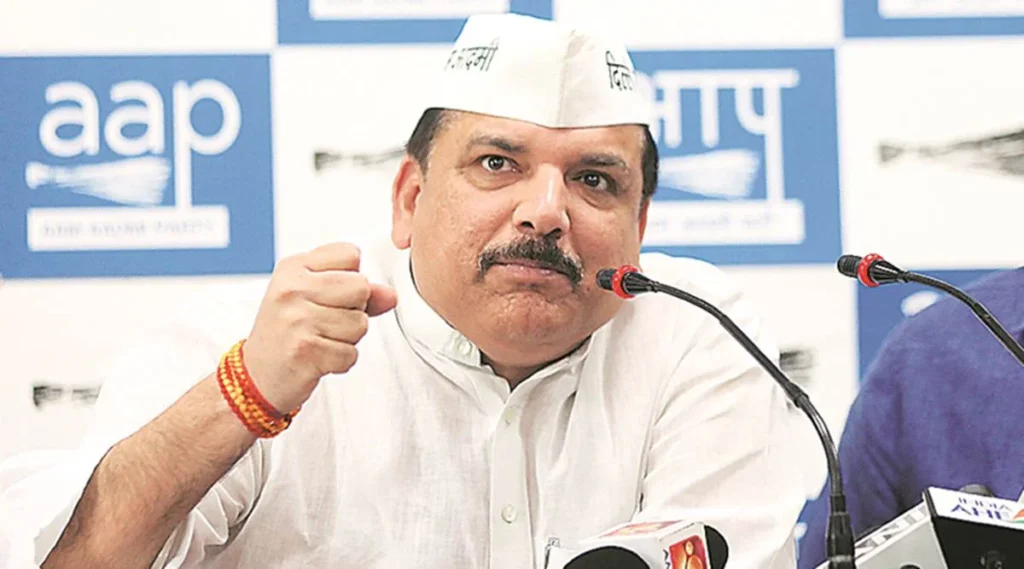
In a recent political development, Aam Aadmi Party (AAP) Member of Parliament Sanjay Singh made significant allegations against Rahul Gandhi, stating that the Congress leader intentionally staged a strike to undermine a protest organized by the Citizens for Justice and Peace (CJP). This assertion has sparked considerable debate and controversy within political circles, as it raises questions about the motivations behind Gandhi’s actions and the implications for the broader opposition movement against the current government.
Sanjay Singh’s claims suggest that Gandhi’s decision to sit out the protest was not merely a personal choice but rather a strategic maneuver aimed at diluting the impact of the CJP’s demonstration. The CJP has been vocal in its efforts to address issues related to justice and human rights, particularly in the context of communal violence and discrimination in India. By allegedly diverting attention away from their protest, Gandhi’s actions could be seen as an attempt to fracture the unity among opposition parties, which is crucial for challenging the ruling government effectively.
The backdrop of this controversy is marked by increasing tensions between various political factions in India, particularly as the country approaches upcoming elections. The opposition’s ability to present a united front is vital for its success, and any perceived division could have detrimental effects on their electoral prospects. As the allegations unfold, they highlight the complexities of political alliances and the strategies employed by leaders to maintain influence and control over narratives in the public domain.
In response, supporters of Rahul Gandhi may argue that his intentions were misinterpreted or that he had valid reasons for his absence from the protest. However, the accusations made by Singh underscore the challenges faced by opposition leaders in navigating a landscape fraught with suspicion and rivalry. As the political landscape continues to evolve, the implications of these allegations will likely reverberate through the ongoing discourse surrounding governance, justice, and the role of dissent in a democratic society.