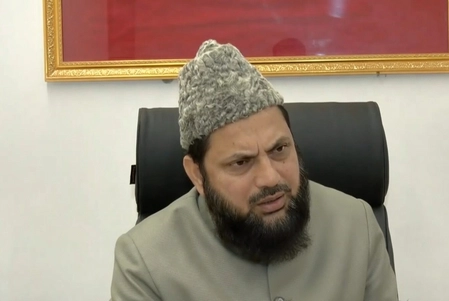
Samajwadi Party MP Mohammad Azharuddin Nadvi recently made a statement highlighting a troubling trend in political discourse. He pointed out that when voices emerge from Punjab advocating for Sikh rights, they are often labeled as “Khalistani,” a term that carries a heavy stigma associated with separatism. Conversely, he noted that when Muslims speak up, they are frequently branded as “Pakistani,” suggesting an unwarranted association with the neighboring country. This rhetoric, according to Nadvi, undermines the genuine concerns and aspirations of these communities, reducing their voices to mere labels and accusations.
Nadvi’s remarks reflect a broader issue within Indian politics, where ethnic and religious identities are often weaponized to dismiss legitimate grievances. He emphasized the need for a more nuanced understanding of regional demands and the importance of engaging in constructive dialogue rather than resorting to divisive rhetoric. By categorizing individuals based on their regional or religious backgrounds, political discourse risks alienating large segments of the population and hampers efforts toward unity and understanding.
The implications of such labeling extend beyond politics; they contribute to societal polarization and can exacerbate tensions among different communities. Nadvi’s call for a change in this narrative is crucial in fostering an environment where all voices can be heard without prejudice or preconceptions. By promoting dialogue and understanding, it is possible to address the underlying issues faced by various communities, paving the way for a more inclusive and harmonious society.
In conclusion, Nadvi’s comments serve as a reminder of the importance of empathy and respect in political discussions. Recognizing the individuality of voices from Punjab, as well as those from the Muslim community, is essential for building a cohesive society that values diversity and promotes shared understanding.