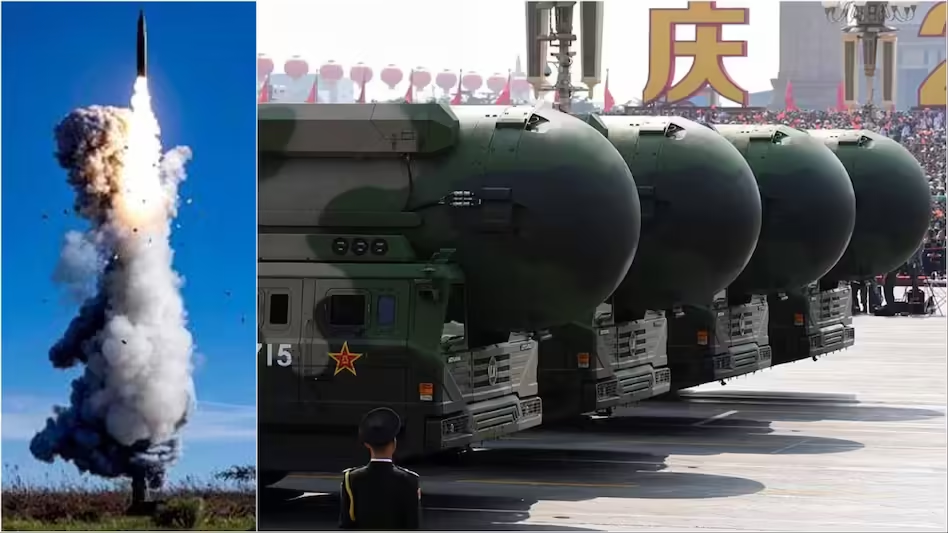
The question of whether India’s S-400 missile defense system can intercept a Chinese missile traveling at a speed of 30,000 kilometers per hour has sparked considerable debate and concern. The S-400, developed by Russia and acquired by India, is regarded as one of the most advanced air defense systems in the world. It is designed to detect, track, and engage various aerial threats, including aircraft, drones, and incoming missiles. However, the capabilities of this system against extremely high-speed missiles have been a topic of scrutiny.
The Defense Research and Development Organization (DRDO) has provided insights into the capabilities and limitations of the S-400 system. While the S-400 is proficient in targeting and neutralizing conventional threats, the interception of hypersonic missiles, which can travel at speeds exceeding Mach 5 (approximately 6,174 kilometers per hour), poses a significant challenge. The Chinese missile, traveling at 30,000 kilometers per hour, would fall into the category of hypersonic speeds, raising questions about the S-400’s effectiveness in such scenarios.
Experts suggest that the S-400’s advanced radar and missile technologies are designed to counter a variety of threats, but the sheer velocity and maneuverability of hypersonic missiles may exceed the system’s operational capabilities. The DRDO emphasizes the importance of continuous advancements in missile defense technologies to keep pace with evolving threats. This includes research into new systems and upgrades to existing ones to enhance their interception capabilities against high-speed projectiles.
In conclusion, while the S-400 is a formidable air defense system, the interception of missiles traveling at extraordinary speeds, such as 30,000 kilometers per hour, remains a complex challenge. Continuous development and innovation in missile defense technology will be crucial for India to effectively counter emerging threats from adversaries, ensuring national security and defense preparedness in an increasingly dynamic geopolitical landscape.